HyperS2C Combines AI Agents, Simulation and FPGA Prototyping for Chip Verification
- Published
- Author
- Akanksha Gaur
- Reads
- 631
HyperS2C’s digital front-end suite links simulation, emulation and FPGA prototyping with AI agents for compilation and debugging.
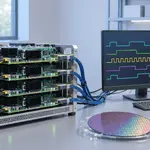
HyperS2C is bringing compilation and debugging assistance into a connected digital front-end design flow, alongside simulation, hardware emulation and FPGA prototyping. The practical idea is to let hardware and software development proceed in parallel, while giving engineers AI agents that can search accumulated engineering knowledge for help with two routine but demanding tasks.

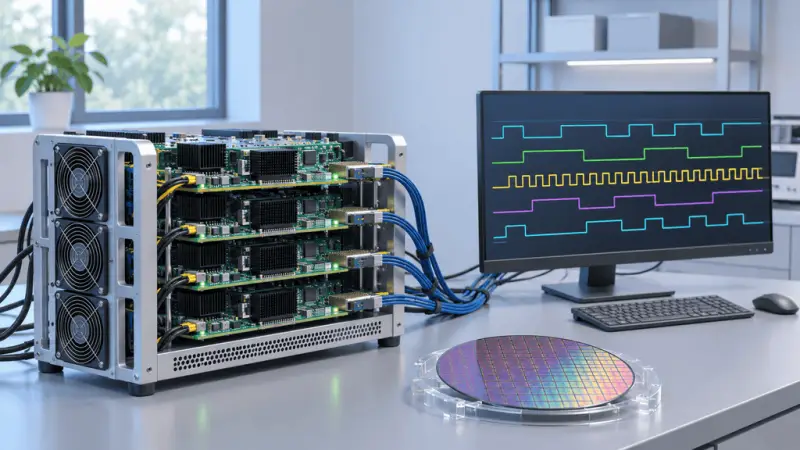
The offering from HyperS2C comprises three product lines: a “5+1” digital front-end EDA tool chain, the HyperHybrid hybrid simulator, and two intelligent agents, HSCompile.aix and HSDebug.aix. The company was formed through the consolidation of S2C and HyperSilicon, whose areas of focus include digital verification, hardware emulation and FPGA-based prototyping.
A connected flow from architecture to debugging
The five stages in the tool chain cover architecture design, software simulation, hardware emulation, prototype validation and debugging. An additional cloud platform connects these tools. HyperS2C presents this arrangement as an environment for development and early verification, bringing several activities that can otherwise be managed across separate tools into one flow.

That connection matters because a design does not move through these stages in isolation. Architecture decisions shape what engineers simulate; simulation and emulation help check behavior; and prototype validation exposes problems in a more hardware-like setting. Debugging then feeds findings back into the design. When the stages share a platform, teams can work across that sequence with fewer handoffs between disconnected environments. The source does not specify supported interfaces, integrations with other vendors’ tools, or platform deployment requirements, so compatibility will depend on details not provided here.
The “+1” in the 5+1 description refers to the cloud platform alongside the five engineering tools. HyperS2C also identifies a retrieval-augmented generation (RAG) knowledge base and a pluggable reasoning engine as features of the system. These components underpin the two AI agents, which are intended to make engineering knowledge searchable and provide assistance within compilation and debugging work.

Hybrid simulation supports parallel development
HyperHybrid is based on the HyperSemu hardware emulator and brings the five engineering tools under a shared simulation environment. HyperS2C says software development can begin before the physical hardware is available. That creates an opportunity for software and hardware teams to progress in parallel, rather than requiring software work to wait for a completed hardware platform.
Starting earlier can help teams find design issues sooner and reduce delays tied to later debugging, while giving hardware and software developers a shared point of reference. The benefit depends on how closely the simulated and emulated environment represents the eventual design and how teams use the results to guide validation. No performance figures, supported design sizes, simulation speeds or measured reductions in development time are provided, so the claimed schedule benefit should be understood as an intended workflow advantage rather than a quantified result.
The hybrid approach also brings a trade-off familiar to verification teams: early software work can expose integration problems before hardware is ready, but it does not replace validation against a prototype. The tool chain includes both hardware emulation and FPGA prototyping, allowing the flow to extend beyond software simulation. The product description does not detail how designs move between those stages, or which FPGA platforms are supported.
AI assistance targets compilation and debug work
HSCompile.aix is designed to assist with compilation tasks, while HSDebug.aix focuses on debugging. Both use the RAG knowledge base and a pluggable reasoning engine. HyperS2C says the searchable assistance draws on more than 20 years of accumulated engineering knowledge. The description does not identify the underlying models, explain how the knowledge base is maintained, or provide benchmark results for either agent.

For engineers, the useful distinction is that the agents address specific points in the design workflow rather than claiming to automate chip development end to end. Compilation assistance can support work preparing a design for subsequent stages; debugging assistance can help engineers investigate failures. The material provided does not say that either agent makes design changes autonomously, nor does it state how engineers review or verify its suggestions. Those operational details will shape how the agents fit into established verification practice.
Intended use in complex digital designs
HyperS2C positions the platform for development and verification of advanced digital circuits, including processors and advanced integrated circuits. The named application areas are AI, automotive electronics, 6G communications and high-performance computing. These fields place substantial demands on design verification, making the combination of simulation, emulation and prototyping relevant to teams working through complex hardware and software interactions.
The suite’s central proposition is workflow integration: connect five front-end engineering stages through a cloud platform, support parallel software and hardware development with hybrid simulation, and add searchable AI assistance for compilation and debugging. For engineering teams assessing it, the next useful details will be tool compatibility, supported hardware targets, data handling in the cloud environment, and measured results from actual verification projects.