Fluke ii1050 and ii1030 Acoustic Imagers Add 202 Microphones for Industrial Inspections
- Published
- Author
- Saba Aafreen
- Reads
- 409
Fluke’s compact ii1050 and ii1030 combine 202 microphones, a 13 MP camera and on-device analysis to help locate leaks and equipment faults.
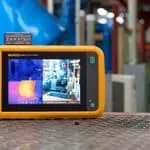
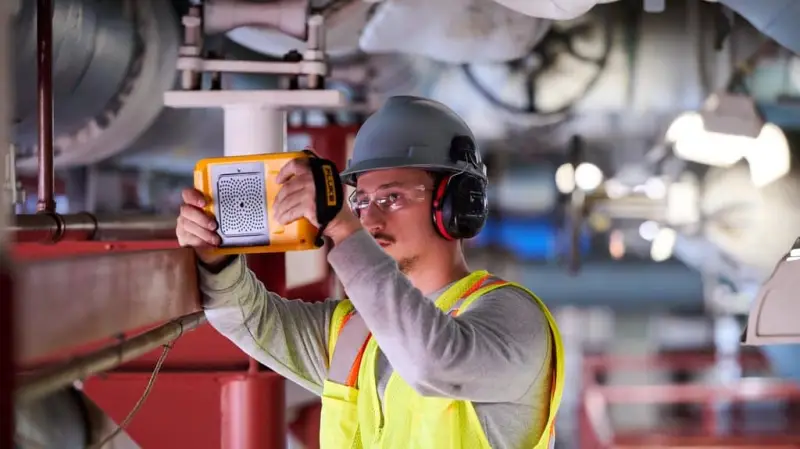
Finding a leak or an early equipment fault is more useful when a technician can locate it during a routine inspection and record the result on site. Fluke’s ii1050 and ii1030 acoustic imagers are designed for that work, combining a 202-microphone array with a 13 MP camera and built-in analysis in a smaller, lighter handheld unit.

The devices are intended to detect compressed-air, gas and vacuum leaks, electrical partial discharge, and developing mechanical problems. Those sources can produce sound patterns that an acoustic imager can help identify and place in the context of a visible scene. That pairing matters in plant work: a sound indication is easier to investigate when the technician can relate it to a pipe, connection, enclosure or machine component.

More microphones in a smaller instrument
Fluke says the two models are around 40 percent smaller than previous models and weigh 1.2 kg. The lighter form is aimed at long inspection rounds and access in tight spaces, where the operator may need to position the instrument around machinery or overhead services. A reduced size can make an instrument easier to carry and handle, though the source gives no dimensions or battery-life figures for comparing the models with earlier units.
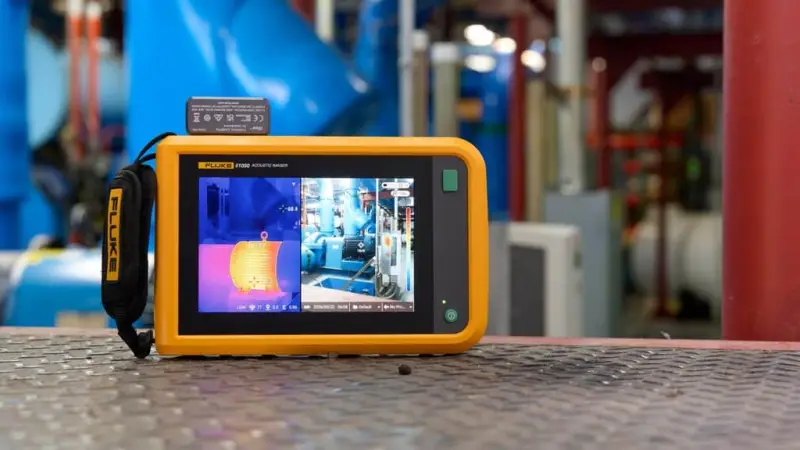
The microphone count rises from 64 in the previous generation to 202 in these imagers. A larger array gives the instrument more acoustic input for forming a sound image, which can help an operator distinguish and locate a sound amid the visual clutter of a working facility. Fluke describes the result as more sensitive detection; it does not provide a detection threshold, frequency range, or quantified comparison under specified test conditions, so those details would be needed to assess performance for a particular inspection route.

A 13-megapixel camera supplies the visual image, and an anti-glare screen is intended to keep that image usable in bright environments. The instruments also include a built-in torch for darker inspection areas. These features support field use by helping technicians see the target and capture findings while moving through the site, rather than relying on a separate light or camera.
On-device records and thermal camera support
Fluke says the imagers provide in-situ analysis and make it possible to log findings during an inspection. Recording observations at the asset can help connect a suspected fault with its location and give maintenance teams information to use when deciding what to investigate or repair first. The product information does not specify file formats, data export options, reporting software, or whether records can be compared over time; teams evaluating them for an existing maintenance workflow will need those details.
Both models carry an IP54 rating. They are also compatible with Fluke’s TC03A plug-in thermal camera, adding a thermal inspection option to the acoustic workflow. The announcement does not explain how the thermal camera connects in practice or whether thermal and acoustic data are combined in a single report, so compatibility alone does not establish the extent of integration.

The stated inspection targets span several maintenance needs. Acoustic detection can help find escaping compressed air, gas or vacuum, as well as electrical partial discharge and mechanical issues. In each case, an imager can help direct attention to a possible problem; technicians still need to interpret the indication and confirm what action is appropriate for the equipment and operating conditions. Fluke positions that earlier visibility as a way to prioritize maintenance, reduce energy waste from leaks and address developing issues before they cause unplanned downtime.
Designed for preventive maintenance rounds
“Maintenance is increasingly less about responding to failures reactively and more about preventing them,” said Tako Feron, Fluke’s senior product manager for acoustic imaging. He said the devices are intended to turn complex inspection data into clear insights so technicians can make faster, more confident decisions.
Jaison Isaac, managing director of Fluke India, said the launch brings inspection capabilities to Indian industries in a more compact design, supporting asset reliability and energy efficiency efforts. These are company statements about the products’ intended role; the published information does not include independent field results or quantified savings.
For maintenance teams, the practical change is a more portable acoustic inspection instrument with a substantially larger microphone array than the stated 64-microphone predecessor, plus visual capture, on-device analysis and optional thermal-camera compatibility. Before standardizing on either model, teams will want to match the available detection specifications and record-management features to their assets and inspection procedures. The core value will depend on whether the instruments help crews find and document actionable indications during the rounds they already perform.