3D Printing and Laser Tools Bring Cosplay and Fan Art to Comic Con
- Published
- Author
- Max Funkner
- Reads
- 628
From costume parts and fan art to live demonstrations, 3D printing and laser tools are now part of the Comic Con maker scene.
3D printing has become part of the working toolkit behind Comic Con costumes, props and collectibles. Across events, creators combine printed parts with laser-cut pieces, paint and hand finishing to turn familiar characters and original designs into things fans can wear, display and take home. The technology also gives exhibitors a way to demonstrate creative processes directly to an audience that may not visit a dedicated maker show.
From printed details to finished collectibles
Comic Cons have expanded well beyond their early focus on comics and science fiction. Today, they bring together cosplay, games, film, fan art and merchandise, with creators showing work at scales ranging from a single costume accessory to full display collections.
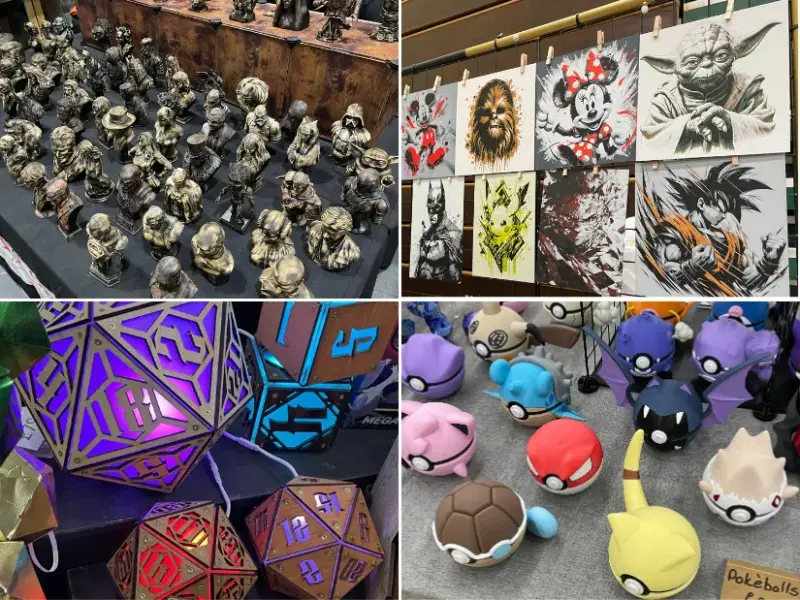
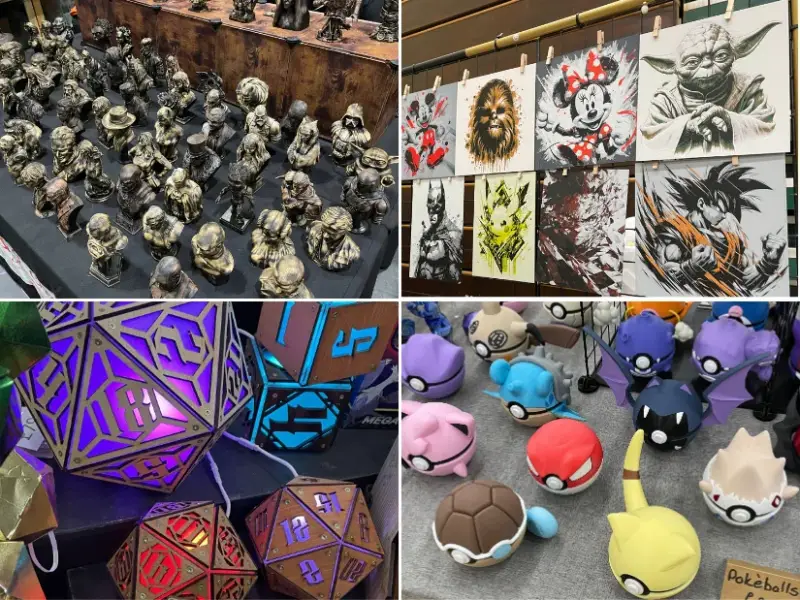
More accessible equipment has helped bring digital fabrication into that mix. Budget FDM printers can produce larger costume components and props; resin printers suit small models with fine surface detail; laser cutters and engravers offer another route for flat parts, decorative elements and personalized items. These methods can appear side by side on the same table, alongside work completed by hand.
©3DWithUs – Photo: Max Funkner
The range is part of the appeal. Some artists favor spare, stylized designs, while others fill shelves with detailed figures, props and laser-cut pieces. A convention stall can function as a small gallery of different production choices: the digital model sets the form, and printing, cutting, assembly and finishing determine how it reads in person.
A booth built around making
At one Comic Con, the Creality booth brought printers and people into the same space. Cosplayer Nathan, known as NMT_Cosplay, wore a Soldier Boy costume from The Boys that included 3D printed elements such as the helmet, knife and armor details. The booth also featured artist Morgan of Printed Obsession, whose work includes printed fan art busts and models.
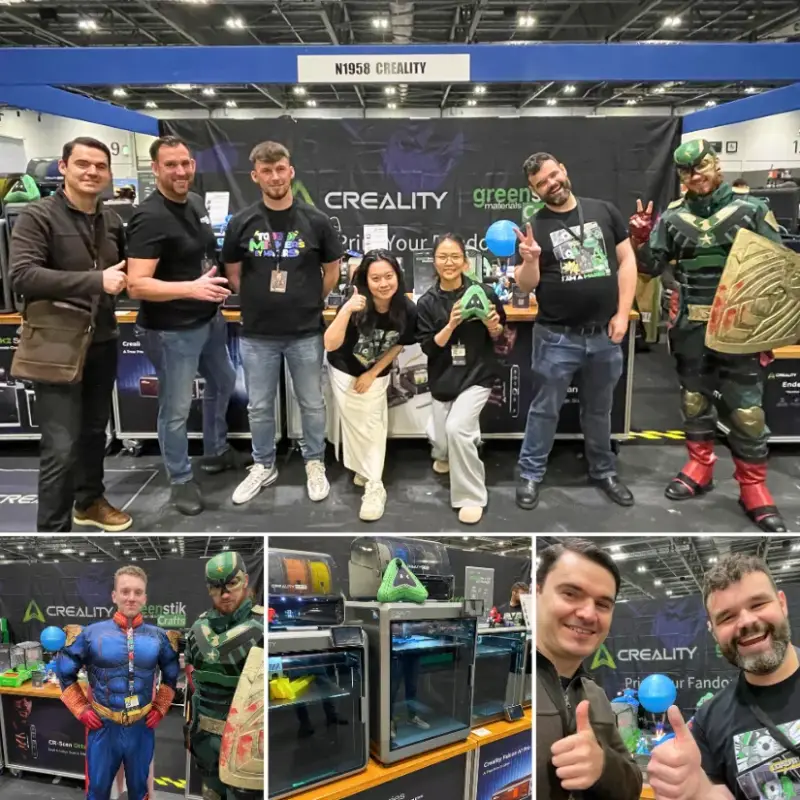
Photo: Max Funkner
Visitors could see machines running, speak with a cosplayer and an artist, and try a mini basketball game using 3D printed balls for a chance to win prizes. That hands-on setup made the equipment easier to understand in context: visitors could connect a finished costume or model with the tools and creative work behind it.
MG Crafts, represented by Brett and Billy, helped run the booth. The UK and Ireland reseller handled setup, technical support and live demonstrations, including printers operating on site and scanners in use. That mix of demonstration and conversation is a practical fit for a convention floor, where a finished object can draw someone in and a working machine can show how it was made.
Laser equipment reaches a wider creative audience
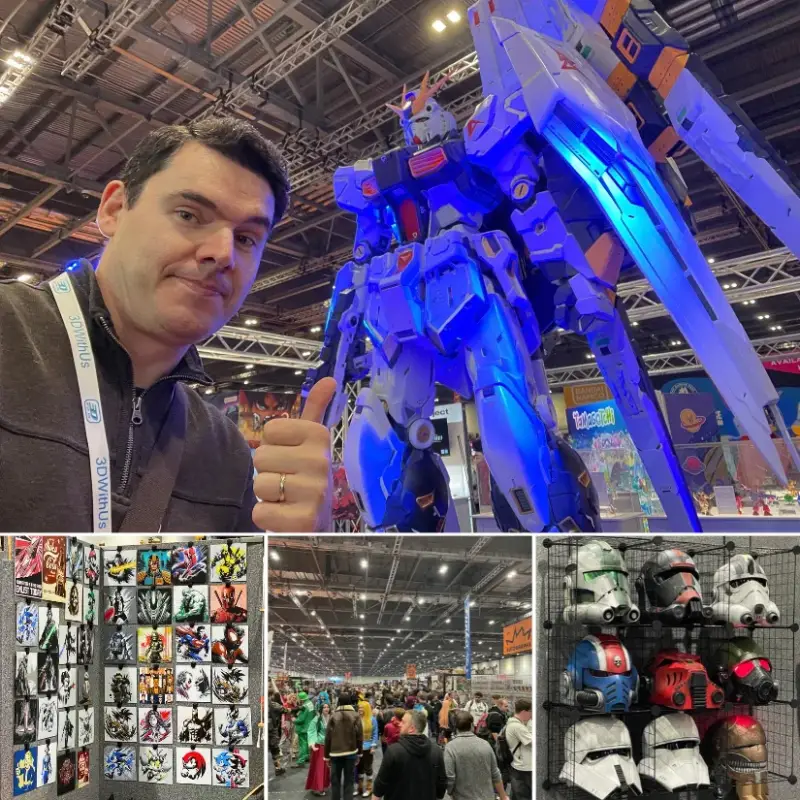
At MCM London Comic Con in October 2026, held at ExCeL London, the halls brought together cosplayers, artists, exhibitors and large displays. 3D printing and laser cutting were visible across costumes, props and collectibles, while the exhibition setting put creative equipment in front of an audience beyond the usual maker-show circuit.
©3DWithUs – Photo and compilation: Max Funkner
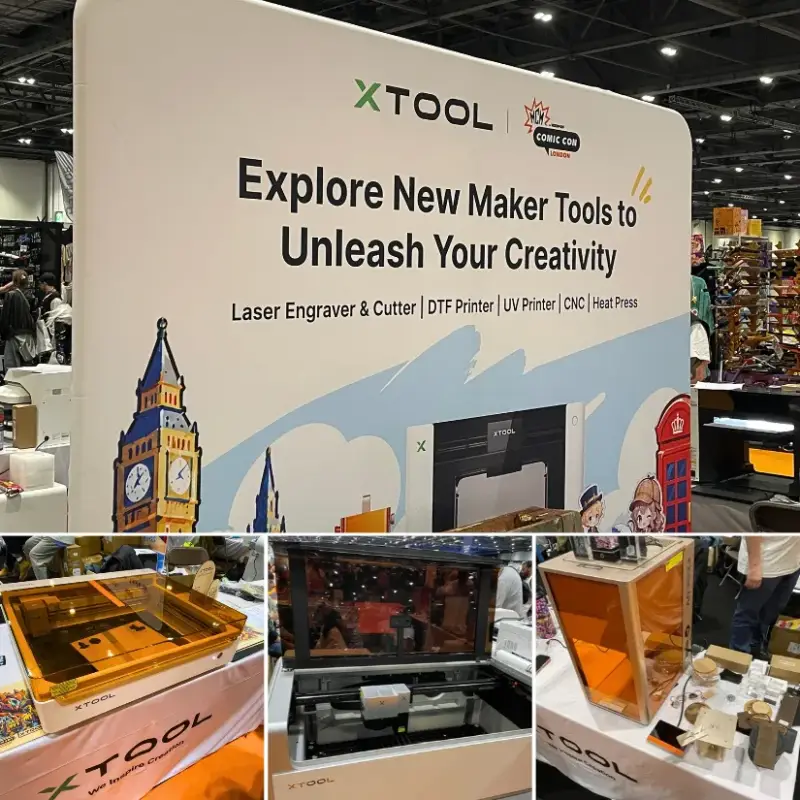
The xTool booth showed the M2, X1 and F2 Ultra laser machines in person. Laser cutting and engraving can support personalized merchandise and costume accessories, among other creative work. Seeing the equipment at a pop culture event makes clear that these tools serve audiences with interests beyond conventional fabrication demonstrations.
©3DWithUs – Photo and compilation: Max Funkner
Cosplay is craft, performance and shared experience
Costumes often take weeks or months to plan, print, sew and finish. The result combines materials and processes, with printed components giving makers a way to create shaped details that would be difficult to reproduce through fabric alone. When a cosplayer agrees to a photo, the exchange also gives visitors a chance to appreciate the labor behind the character.
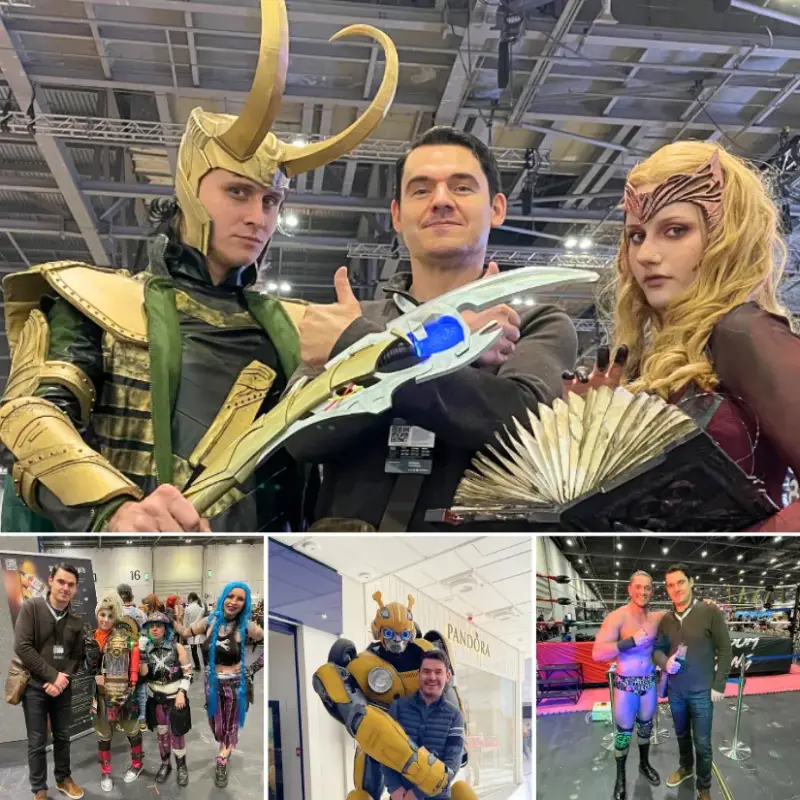
Photo: Max Funkner
Some portrayals can be strikingly close to their screen counterparts, from the costume and silhouette to the way a character is presented. That level of detail turns cosplay into more than a set of fabricated parts: construction, fit and performance all contribute to the effect.
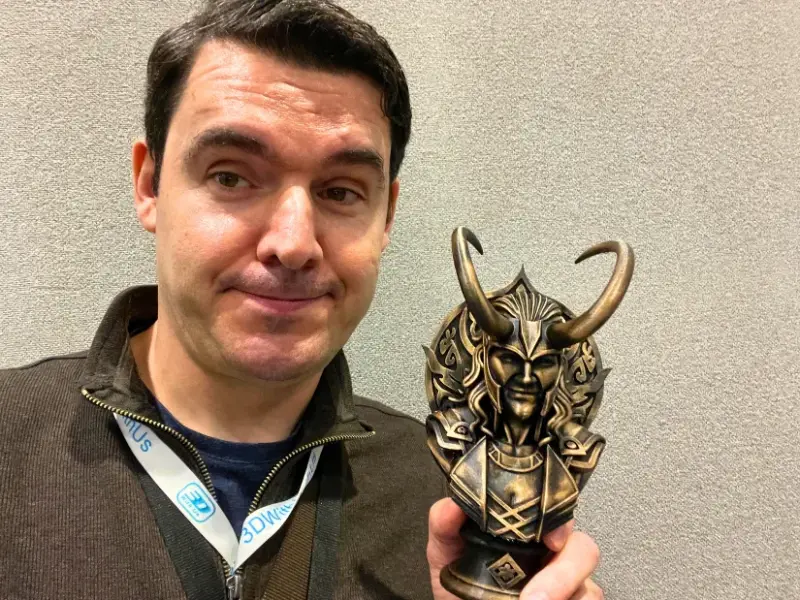
Photo: Max Funkner
A printed Loki bust purchased after meeting a Loki cosplayer illustrates another side of fan collectibles. Even someone with printers at home may value a finished piece from an event because it carries a memory as well as a design. The object’s meaning comes partly from where and why it was chosen.
Events at every scale
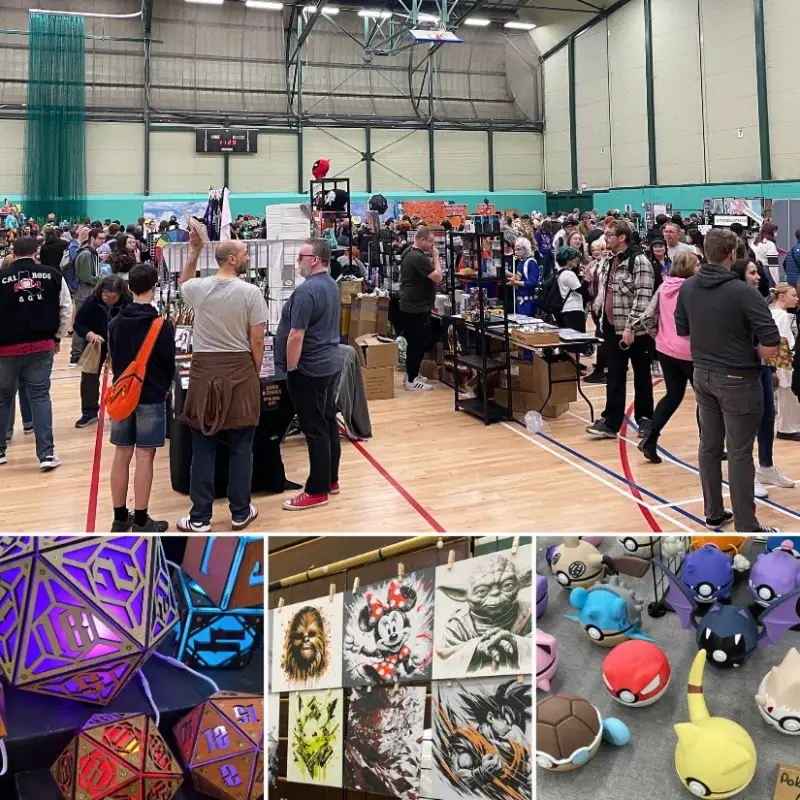
Large annual conventions such as San Diego Comic Con and New York Comic Con in the United States, and MCM Comic Con in London and Birmingham in the UK, sit alongside local and regional gatherings. Smaller events may offer closer access to artists and a more personal feel, while still bringing together costumes, fan art and maker-built merchandise.
©3DWithUs – Photo: Max Funkner
For makers, a neighborhood event can be a useful place to see how people respond to a piece, meet other creators and discover practical uses for fabrication tools. Searching for nearby conventions or checking local venue listings can help identify events of different sizes. Across them, 3D printing’s role is clear: it gives fans and artists another way to make their ideas tangible, while conventions provide a place to share the results.