IBM, NVIDIA and Fermilab Build a Platform for Modular Quantum Computing Research
- Published
- Author
- Semiconductor For You
- Reads
- 767
The platform pairs IBM quantum processors with NVIDIA computing to study error correction, scientific workloads and supercomputer integration.
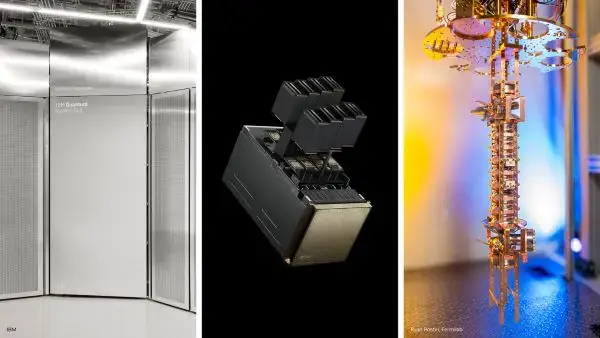
Scaling quantum computing for scientific work depends on more than increasing processor size. Researchers also need ways to correct errors, coordinate quantum and classical computing, and test how linked processors could support demanding applications. A new codesign effort involving IBM, NVIDIA and Fermi National Accelerator Laboratory is intended to bring those questions into one research platform.
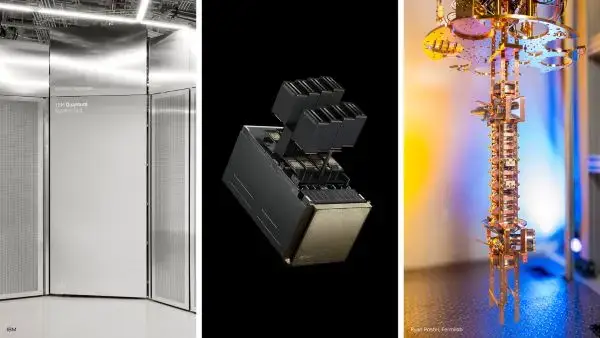
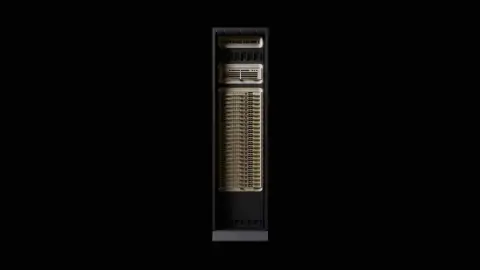
Announced November 16, 2026, the collaboration will combine IBM quantum computers with NVIDIA accelerated computing and software. NVIDIA DGX B200 systems are being colocated with IBM quantum computers, including systems powered by IBM Quantum Nighthawk, which IBM describes as its most powerful quantum processor to date. The joint platform is designed to let researchers evaluate quantum hardware and classical computing together as they investigate future modular architectures.
Codesigning processors and classical systems
The work brings together IBM, Fermilab and NVIDIA to study quantum error-correction codes, decoding algorithms and quantum-classical applications. A central question is how classical computing capacity should scale alongside multiple connected quantum processors. That matters because a modular system has to coordinate its parts as well as run quantum operations on individual processors.
Fermilab’s contribution focuses on error correction and applications in high-energy and nuclear physics. Those research needs can help define what future fault-tolerant quantum computers must deliver, and which scientific problems such machines might be able to address. The platform is also intended to explore how accelerated classical computing can support the design and study of increasingly complex quantum systems.
“Making quantum computers useful for science requires advances in error correction, applications and the systems that bring quantum processors and accelerated computing together,” said Krysta Svore, NVIDIA’s vice president of applied research for quantum computing. IBM Fellow and chief technology officer of quantum-centric computing Jerry Chow said that working with Fermilab and NVIDIA would help the group explore how scientific problems could shape modular, interconnected systems.

Fermilab chief technology officer and SQMS Center director Anna Grassellino described the proposed platform as a way to combine NVIDIA computing, IBM quantum technology and Fermilab’s scientific expertise. The practical value of the effort will depend on what researchers learn about codes, system coordination and the computing resources needed for specific workloads.
Decoder cuts research computation time
Quantum processors are vulnerable to errors that limit how long and how complex their computations can be. Error correction encodes quantum information across multiple physical qubits. A classical decoder then interprets measurement data to estimate which errors occurred, so researchers can determine how to correct them.
NVIDIA’s TCBP-JOBS decoding algorithm is available through the CUDA-Q QEC 0.9.0 library. NVIDIA says it can accelerate computationally intensive error-correction research by up to 13,000x while maintaining high accuracy. In the reported comparison, work that took 12 weeks could be completed in 45 minutes.
The speedup applies to research calculations used to assess candidate codes and decoder configurations. Faster runs can let teams compare more approaches and examine how well designs use physical qubits. That can help researchers judge potential performance improvements and make progress toward fault-tolerant computing, though the reported decoding result alone does not establish that a practical fault-tolerant system has been achieved.
Quantum-classical chemistry at larger scale
A separate IBM and RIKEN research effort illustrates another use for combining quantum processors with accelerated classical computing. The work, which uses IBM’s quantum computer and RIKEN’s JHPC-quantum GPU supercomputer ROQUO, was named a finalist for the 2026 ACM Gordon Bell Prize.
The researchers calculated binding energies for two protein-ligand complexes to study interactions relevant to drug discovery. They divided the systems into fragments, then combined quantum sampling with GPU-accelerated calculations. The resulting models contained up to 12,635 atoms, more than 40 times the size of the previous 303-atom quantum-classical benchmark described for this work.
ROQUO uses NVIDIA GB200 systems and NVIDIA Quantum-X800 InfiniBand networking. The configuration supports research in quantum algorithms, simulation and hybrid computing. The project receives support from NEDO, Japan’s New Energy and Industrial Technology Development Organization, through its research and development program for a quantum-supercomputer hybrid platform.
Scheduling quantum processors with Slurm
Adding quantum hardware to a supercomputing environment can require custom integration work. NVIDIA is expanding the open-source Slurm workload manager with a quantum interface intended to let researchers schedule quantum processors alongside CPUs and GPUs using familiar commands, policies and tools. IBM is contributing through its Quantum Resource Management Interface, which connects IBM quantum resources to the new Slurm capabilities.
For computing centers, shared scheduling tools could reduce the extra engineering and maintenance involved in supporting quantum hardware and hybrid applications. The codesign platform, faster decoding and Slurm integration address different parts of the same challenge: testing quantum systems as coordinated computing resources. The next useful measure will be how well these tools support real research workloads and help teams identify architectures suited to specific scientific problems.