NVIDIA Vera CPU Rack Targets Memory-Bound Scientific Computing
- Published
- Author
- Semiconductor For You
- Reads
- 794
A liquid-cooled Vera rack pairs 192 CPUs with InfiniBand and up to 200TB/s of peak memory bandwidth for scientific workloads.
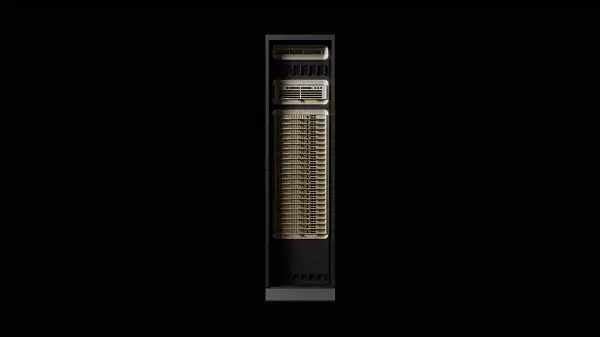
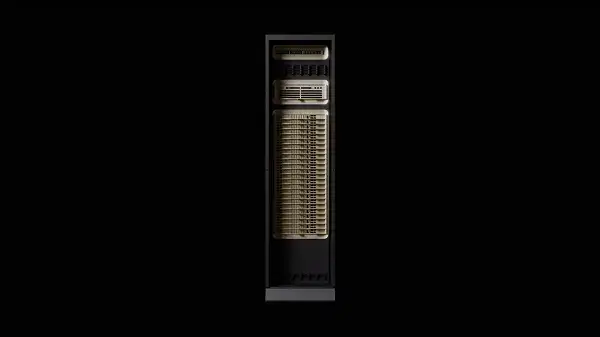

NVIDIA’s Vera platform is built around a familiar constraint in high-performance computing: simulation speed depends on keeping data moving as the work scales across processors. Its rack combines 192 custom CPUs, high-bandwidth memory and InfiniBand networking, with a design aimed at climate models, molecular dynamics and other scientific workloads that run on CPUs.
The liquid-cooled system is specified to deliver more than 200TB/s of aggregate peak memory bandwidth. That figure describes the rack’s peak capability; real application performance will depend on the software, data access patterns and scale of a given run. NVIDIA says its testing showed 1.9x the performance and 2.4x the performance per watt of x86 systems on the OpenFOAM motorBike Large airflow simulation. Those results are specific to that test and should be read as a vendor comparison rather than a general measure across scientific codes.
CPU and rack design
Each Vera CPU has 88 NVIDIA Olympus cores and supports 176 threads. NVIDIA specifies up to 1.2TB/s of memory bandwidth per CPU, supplied by compact, serviceable SOCAMM2 LPDDR5X memory. The combination is intended for applications that repeatedly move large datasets through a simulation, where memory throughput can constrain how much work the cores complete.
At rack scale, the system brings together approximately 300TB of memory and 1 petabyte of storage in a liquid-cooled NVIDIA MGX design. Each 1U tray contains eight Vera CPUs, along with NVMe storage and management components. The 192-CPU configuration therefore comprises 24 such trays.
The platform reuses rack components from NVIDIA’s NVL72 design, including its chassis, power distribution and cooling infrastructure. Reusing those elements may make deployment and service more familiar for organizations already working with that rack architecture, though the source does not specify installation requirements or operating costs for Vera systems.
NVIDIA Quantum-X800 InfiniBand connects the CPUs. The platform also uses NVIDIA SHARP In-Network Computing, which performs some data aggregation within the network. For distributed simulations, that can reduce the amount of coordination work processors must handle themselves. The practical benefit depends on how well a workload’s communication pattern maps to the network and software stack.
Climate workloads and system selection
NVIDIA reports projected Vera gains of 1.6x in performance and 2x in energy efficiency over x86 for the open-source Weather Research and Forecasting model. These are projections from NVIDIA’s benchmarking, not reported results from an operating Vera installation. They provide an indication of the workload the company is targeting, while leaving application-level results for researchers and system operators to establish.
DKRZ, the German Climate Computing Center, has selected Vera CPUs for its HLRE-5 supercomputer. The planned system will also include NVIDIA GB200 Grace Blackwell systems and NVIDIA Quantum-2 InfiniBand networking. Bull is building the system, which is expected to become available in early 2028. DKRZ plans to use it for climate simulation and AI research, including global climate simulations at kilometer scale, with lower energy consumption than its current system.
The HLRE-5 configuration shows that Vera can be deployed alongside GPU systems and a different InfiniBand generation from the Quantum-X800 used in NVIDIA’s Vera rack description. That makes the planned machine a mixed compute environment, rather than a standalone Vera installation. Its eventual results will depend on how researchers divide workloads among the CPUs, GPUs, memory and network.
Software and availability
NVIDIA HPC SDK 26.11 is available now with compilers and libraries optimized for Vera. The software layer matters because processor features only translate into useful application performance when compilers, libraries and scientific codes can make use of them.
NVIDIA is also introducing a public beta of a next-generation Fortran compiler developed in collaboration with high-performance computing centers and national labs. It is intended to let developers run existing Fortran programs on NVIDIA platforms with greater speed, without rewriting their code. The claimed benefit is an easier route for established scientific software to use the platform; the source does not provide independent performance results for the beta compiler.
Dell Technologies, HPE, Lenovo and Supermicro are expected to offer Vera CPU racks beginning in early 2027. For engineering teams assessing the platform, the key questions will be how their own codes perform, what memory and network behavior they require, and how the rack fits their cooling and service environment. NVIDIA’s benchmark figures establish a starting point; workload-specific measurements will determine whether Vera’s bandwidth and efficiency translate into practical gains.