SHINING 3D Scanner Lineup: EZ Go, EinScan Trak, Rigil Lite and EINSTAR Models
- Published
- Author
- 3DWithUs
- Reads
- 928
From a 288 g phone-powered scanner to a tracked professional system, SHINING 3D’s range spans mobile capture, inspection and reverse engineering.
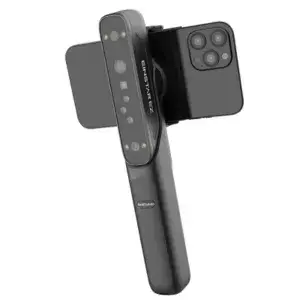
SHINING 3D’s scanner range now stretches from the 288 g EINSTAR EZ Go, which uses a smartphone for mobile capture, to the EinScan Trak, a professional system that combines optical tracking with a detachable handheld scanner. Between them sit standalone and wireless models aimed at different balances of speed, detail, portability and onboard processing. The practical distinction is workflow: whether a job calls for phone-based capture, cable-free scanning, a self-contained unit, or tracked coverage of a large object.
SHINING 3D says its EinScan and EINSTAR products draw on more than 20 years of metrological 3D scanning work. The company’s professional systems are described as delivering accuracy from 5 to 50 microns for high-precision measurement and full-size inspection. The EINSTAR line brings that development base to entry-level and prosumer products, with the models below varying substantially in how they capture and process scan data.
Phone-based capture with EINSTAR EZ Go
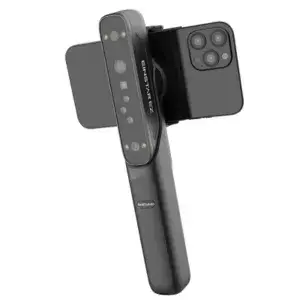
The EINSTAR EZ Go is a compact scanner that attaches magnetically to a smartphone. The phone provides the display and controls, including real-time scan preview and adjustment, so capture does not require a separate computer. At a listed price of $899, the 288 g device is the most portable option described here.
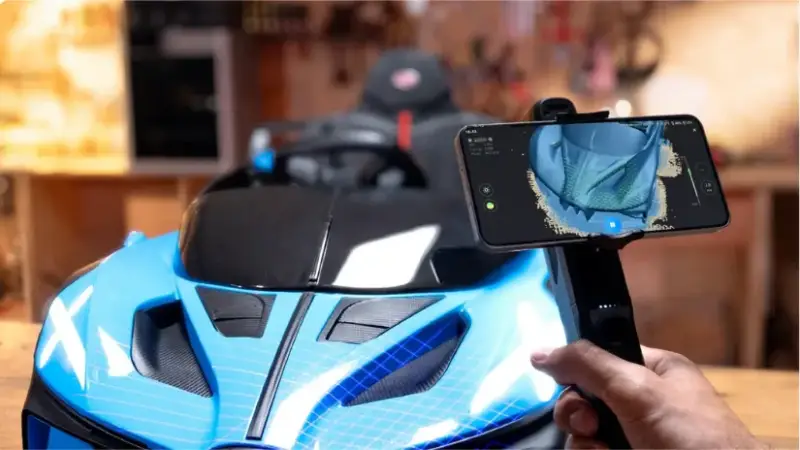
Its capture system combines marker-free laser scanning, AI-assisted tracking and an RGB camera for color. SHINING 3D also lists support for 3D Gaussian Splatting, a method intended to preserve visual detail such as hair, fabric, reflective materials and fine surface texture. The company positions the scanner for objects ranging from furniture and sculptures to people, educational models and digital assets for gaming and AR/VR.
The stated operating range includes lighting conditions up to 80,000 lux, which allows outdoor use under the conditions specified by the manufacturer. AI-assisted tracking is described as supporting black, reflective and low-texture surfaces. These capabilities make the EZ Go’s phone-based workflow especially relevant where portability and rapid setup matter more than a dedicated workstation during capture.
- Weight: 288 g
- Interface: magnetic smartphone attachment, with real-time preview and controls
- Capture: marker-free laser scanning and AI-assisted tracking
- Color: integrated RGB camera
- Additional capture support: 3D Gaussian Splatting
- Lighting: operation in conditions up to 80,000 lux
Managing scans with ShiningSpace
SHINING 3D has also introduced ShiningSpace, a browser-based service for storing, organizing, viewing and sharing 3D assets made from real-world scans. Users can upload models, arrange them in a repository, preview them in a browser and share them with others. The service supports different viewing modes and gives creators control over how their files are presented and accessed.
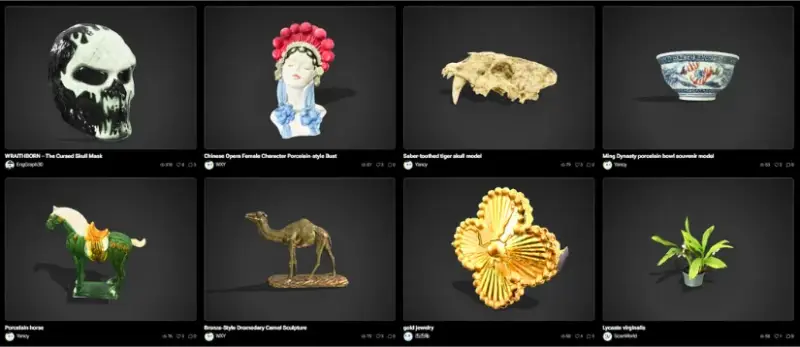
A model repository addresses a practical step after capture: keeping scan files accessible for review and sharing. The platform is presented as a place to showcase and discover models as well as manage them, extending the workflow beyond the scanning session itself.
EinScan Trak: tracked coverage and handheld detail
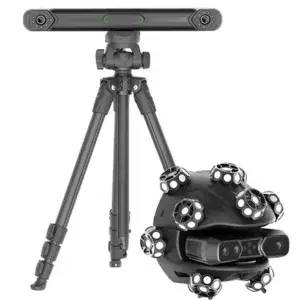
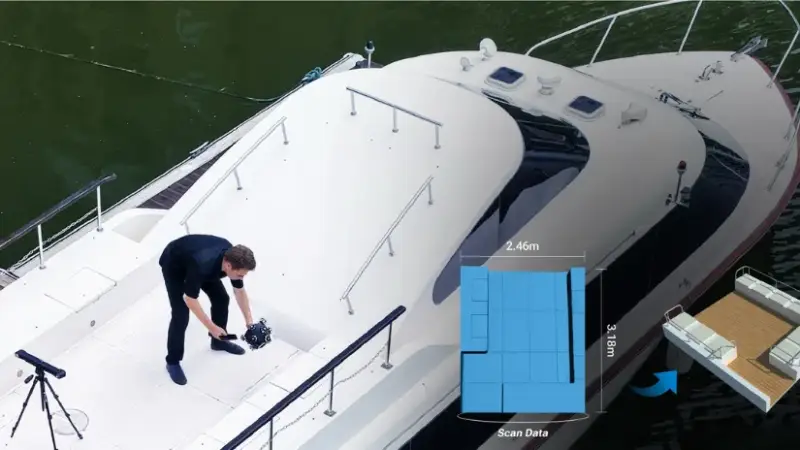
At a listed price of $6,999, the EinScan Trak targets professional work on medium and large objects. Its optical tracker follows the position of a spherical handheld scanner, allowing broad-area capture without placing tracking markers directly on the object. SHINING 3D names vehicles, boats, machinery and other large objects as suitable applications.
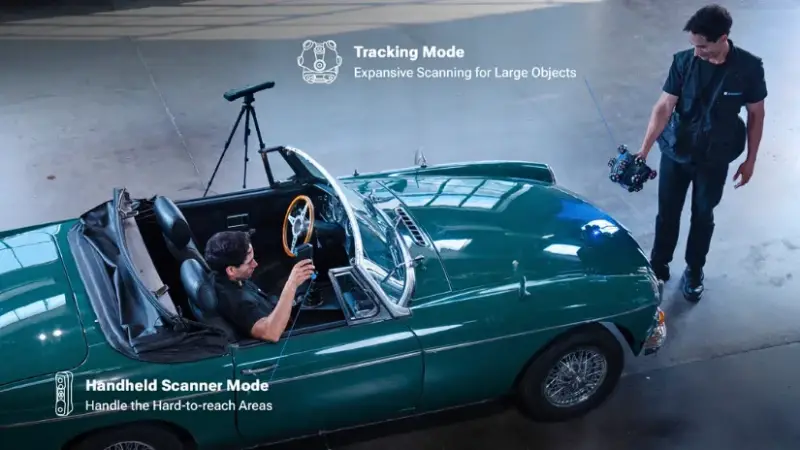
For localized detail, deep cavities or difficult-to-reach geometry, the scanner detaches from the tracker and operates independently in handheld mode. Data from both modes can be combined in the same project group. That lets an operator establish the broad shape of a part, then move closer to capture specific features without setting up a separate scanning system.
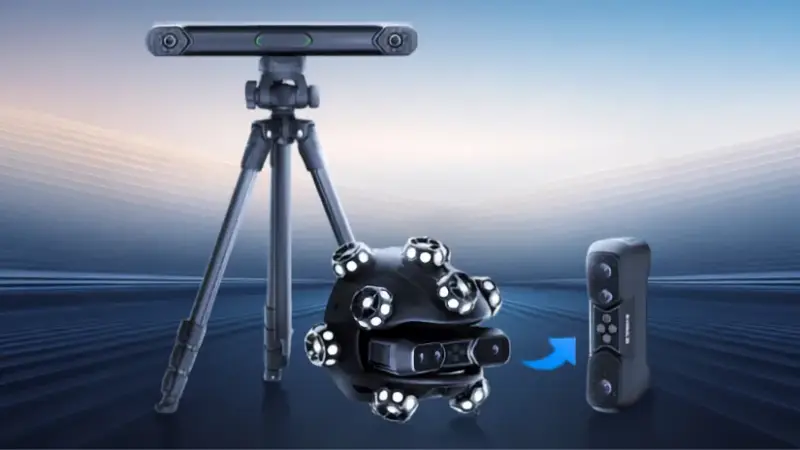
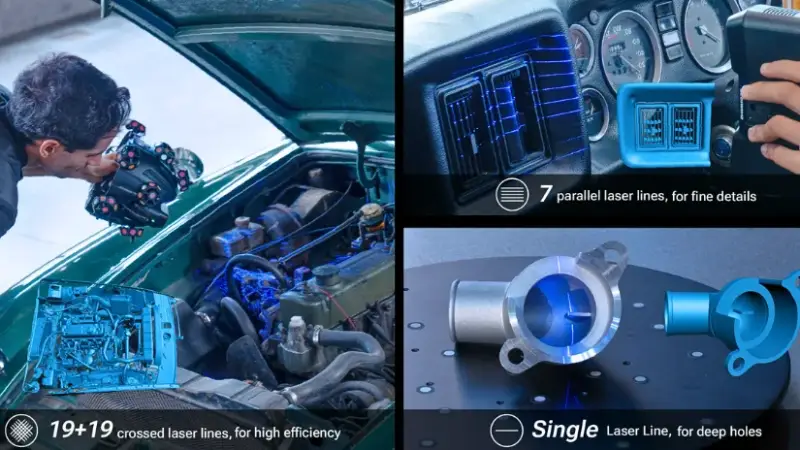
The manufacturer specifies three blue laser configurations: 19 + 19 crossed lines, 7 parallel lines and a single line. The crossed pattern supports fast capture, the parallel lines are intended for finer features, and the single line can reach deep holes and other difficult geometry. The system’s listed volumetric accuracy is up to 0.1 mm, with resolution from 0.05–10 mm and scanning speed up to 2,630,000 points/s.
- Working modes: Tracking Mode and Handheld Scanner Mode
- Laser patterns: 19 + 19 crossed lines, 7 parallel lines and a single line
- Volumetric accuracy: up to 0.1 mm
- Resolution: 0.05–10 mm
- Scanning speed: up to 2,630,000 points/s
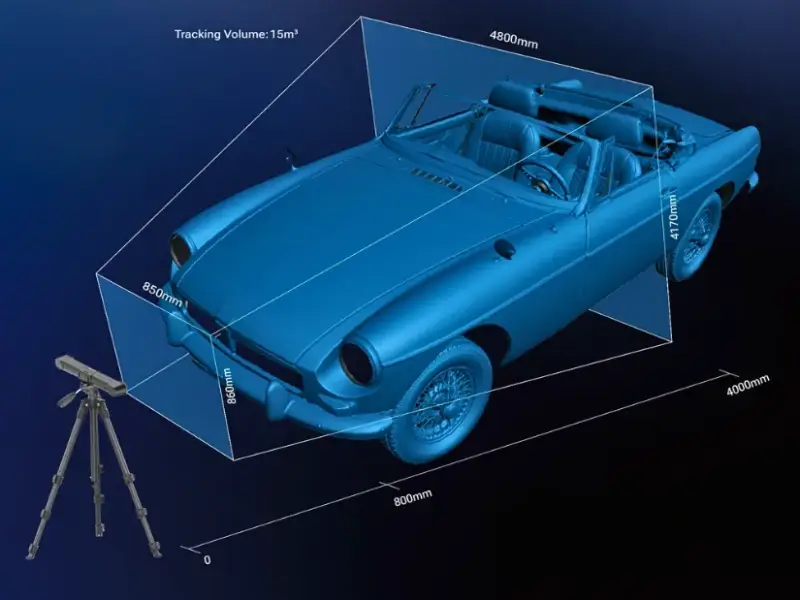
- Tracking distance: 800–4,000 mm
- Maximum tracking field of view: 4,796 × 4,174 mm at 4,000 mm
- Tracking volume: up to 15 m³
- Color camera: 5MP texture camera
- Output formats: STL, OBJ, PLY, 3MF and ASC
- Battery life: up to 5.5 hours in tracking mode and 3.5 hours in handheld mode
In tracking mode, the optical tracker follows retroreflective markers on the scanner itself. This avoids distributing tracking markers across the object and can reduce preparation time on large surfaces. Handheld scanning can also run without object markers when the surface has sufficiently rich, non-repetitive features. Global markers remain an option for projects requiring more controlled alignment or the highest level of detail.
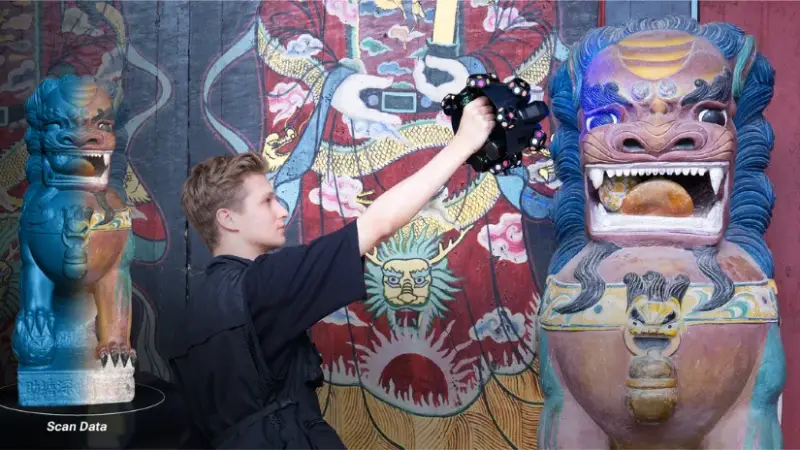
A 5MP texture camera captures color alongside geometry. That can matter in applications such as artwork digitization, museum collections, education and digital archiving, where surface appearance is part of the record as well as dimensional form.
Scanning connects to measurement and reverse engineering through SHINING 3D’s software. EXMeasure supports model alignment, geometric feature creation, color-map comparison, GD&T inspection, and measurements of length, diameter, angle, area and volume. A one-year EXMeasure license is included with the EinScan Trak purchase.
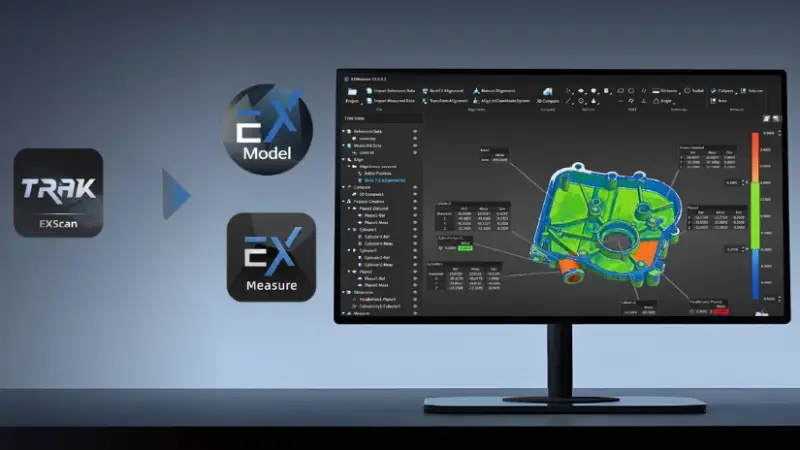
For reconstruction work, the EXModel software series includes mesh editing, coordinate alignment, primitive extraction, cross sections, 2D and 3D sketching, free-form modeling, auto surfacing and feature-based reconstruction. The workflow is intended to take captured scan data toward editable, CAD-ready geometry for redesign and manufacturing tasks.
EinScan Rigil Lite: standalone scanning with PC options
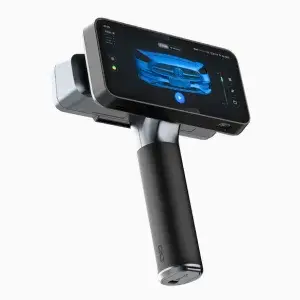

The EinScan Rigil Lite is listed at $3,199–$3,899 and combines onboard processing, a touchscreen workflow and hybrid blue laser and infrared capture. It can scan independently, or connect to a PC wirelessly or by cable. This gives users a self-contained option while preserving a route to PC-based work for more demanding projects.
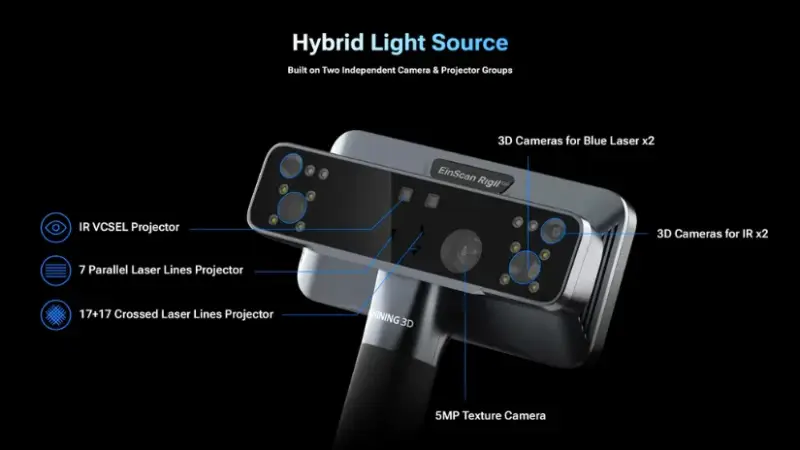
Its blue laser modes use 17+17 crossed lines for finer detail and 7 parallel lines, alongside an IR VCSEL mode for faster, wider-area capture. In crossed blue laser mode, the listed speed reaches 2,940,000 points/s; IR Rapid mode reaches up to 16,000,000 points/s. The working distances and resolutions vary by mode, so selecting a capture mode depends on the part size and the desired detail.
- Operating modes: standalone, PC wireless and PC wired
- Light sources: 17+17 crossed blue laser lines, 7 parallel blue laser lines and IR VCSEL
- Scan modes: Laser HD and IR Rapid
- Maximum speed: 2,940,000 points/s in crossed blue laser mode; 16,000,000 points/s in IR Rapid mode
- Working distance: 170–550 mm in Laser HD; 160–1500 mm in IR Rapid
- Resolution: 0.05–10 mm in Laser HD; 0.2–10 mm in IR Rapid
- Color: 5MP texture camera
- Memory and storage options: 24GB LPDDR5 with 512GB SSD, or 32GB LPDDR5 with 1TB SSD
- Output formats: STL, OBJ, PLY, 3MF and ASC
The standard EinScan Rigil is the higher-performance sibling. It uses 25+25 crossed blue laser lines, compared with 17+17 on the Lite, and SHINING 3D states that the larger line pattern is around 40% faster. Listed crossed-laser speed reaches 4,800,000 points/s for Rigil versus 2,940,000 points/s for Rigil Lite.
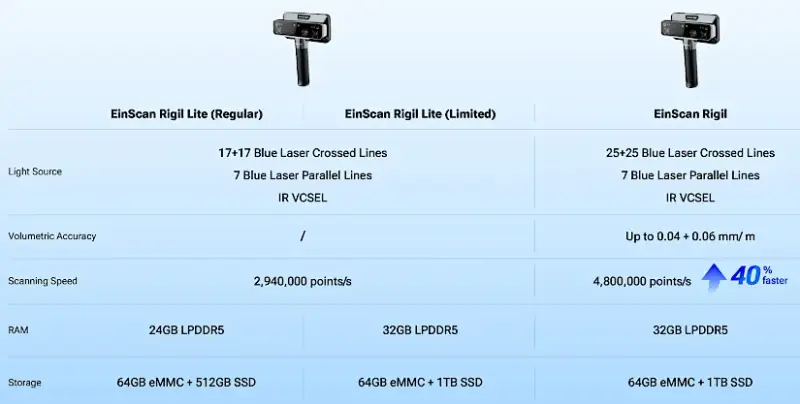
Rigil’s listed hardware includes 32GB LPDDR5 RAM and a 1TB SSD; the Lite starts with 24GB LPDDR5 and a 512GB SSD. The stated volumetric accuracy for Rigil is up to 0.04 + 0.06 mm/m, while the Lite is positioned below it. The choice is therefore tied to the value of greater laser-line density, speed and hardware capacity in the intended workflow.
Wireless handheld scanners: EINSTAR Rockit and EINSTAR 2
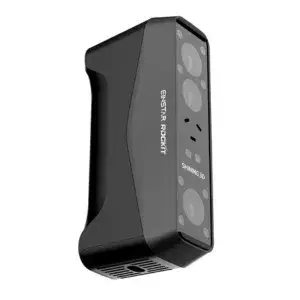
EINSTAR Rockit is a compact wireless scanner listed at $1,699–$1,899. It combines laser and infrared scanning, with 38 crossed laser lines for fast, large-area capture and 7 parallel lines for fine features. SHINING 3D describes it for work ranging from small parts to large objects, including automotive and production workflows.
Rockit’s built-in Wi-Fi and swappable battery support cable-free use for several hours. A wired connection remains available if wireless interference becomes an issue. The wireless arrangement can make it easier to move around a large object or work in a confined space, while the marker-free laser workflow can reduce setup when a surface has enough structure for tracking.

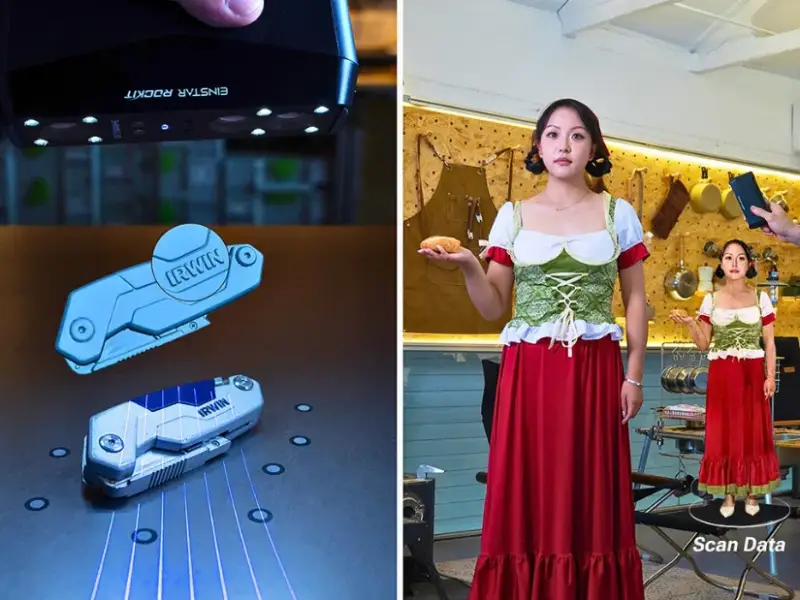
EXStar Hub brings scanning, alignment and basic post-processing into one interface. Its tools are intended to support data alignment, quality improvement and model preparation for 3D printing, reverse engineering and digital visualization.
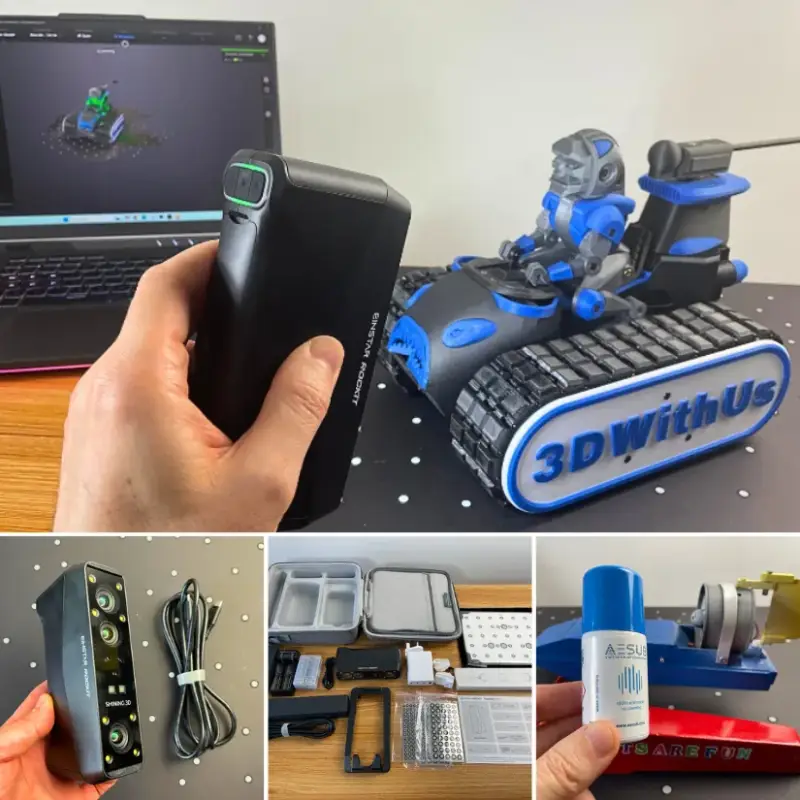
A hands-on account by Max Funkner describes trying Rockit on objects including a customized car model and a DIY RC boat. Funkner reports quick setup, guidance from EXStar Hub and comfortable handling during longer sessions, with the scanner used across different sizes, surfaces and levels of detail. The account characterizes Rockit as a flexible option for makers and prosumers who want texture capture and mesh detail in one workflow.
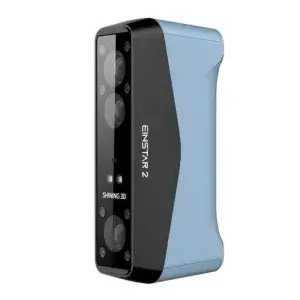
The EINSTAR 2, listed at $1,049–$1,249, shares the wireless handheld format and EXStar Hub workflow but is positioned at a lower price. Its stated upgrades over the original EINSTAR include wireless operation and 17 parallel blue laser lines. A swappable battery and built-in Wi-Fi support cable-free capture, with a wired option available when needed.
Its hybrid light system pairs blue laser with infrared VCSEL. The laser mode is intended for small objects, fine details and reflective surfaces, while infrared supports faster capture of larger objects and use in darker or outdoor conditions. The product description also states that it can scan black and reflective parts without spray. The scanner is presented for automotive components, reverse engineering and creative work.
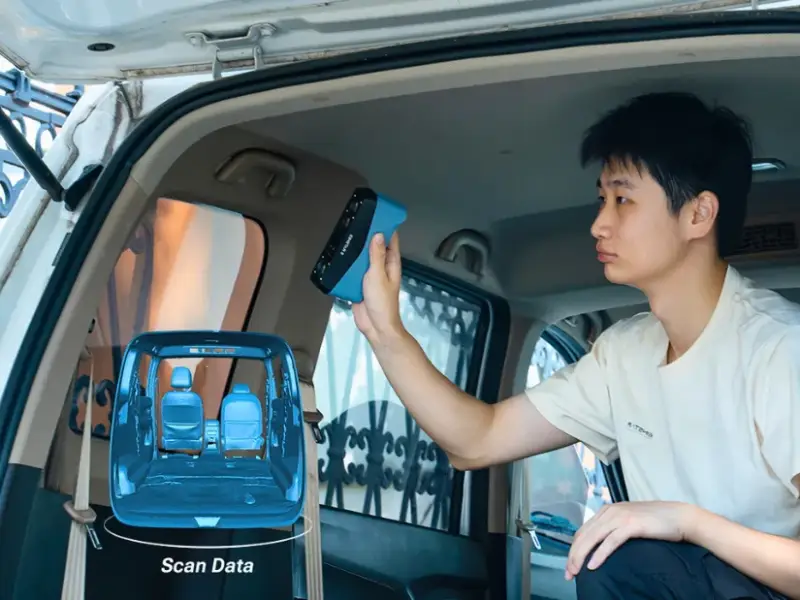
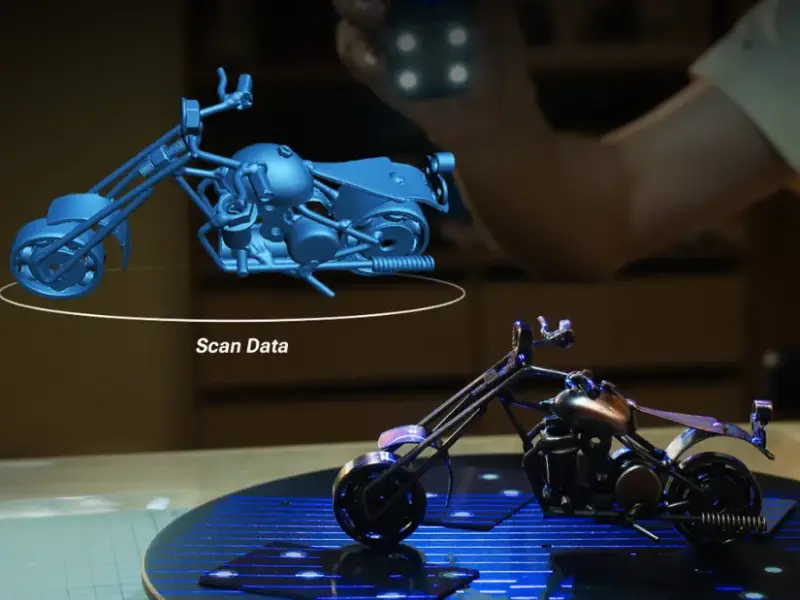
Rockit and EINSTAR 2 share the same general workflow and software, but their laser layouts differ. EINSTAR 2 uses 17 parallel blue laser lines and is listed at up to 90 fps; Rockit combines 38 crossed lines with infrared for broad capture and 7 parallel lines for detail. The models are both aimed at makers, creators and prosumers, with stated applications including aftermarket work, reverse engineering, AR/VR content, 3D printing, personal manufacturing, heritage preservation and art.
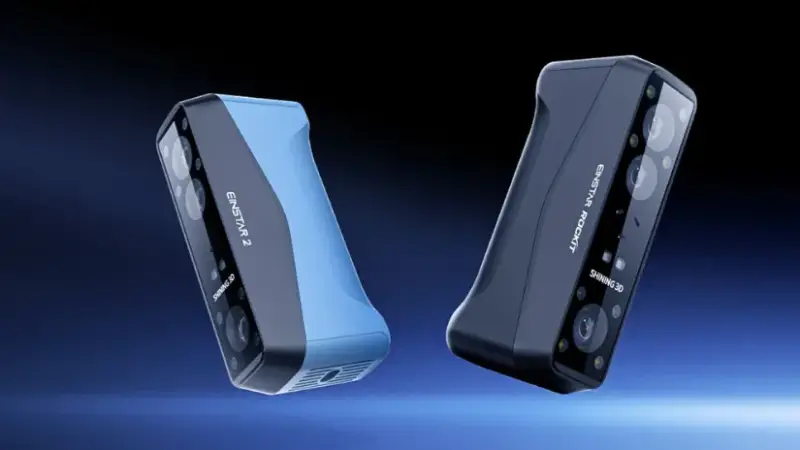
The choice between them comes down to the specified capture configuration, application and price. Rockit’s larger crossed-line pattern is set up for fast area coverage with a separate parallel-line mode for detail; EINSTAR 2 adds its 17-line parallel arrangement and reaches the lower listed price of $1,049, compared with $1,699 for Rockit.
EINSTAR VEGA and the wider product range
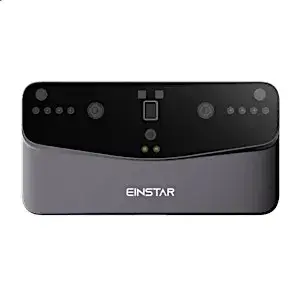
The EINSTAR VEGA, listed at $1,599–$1,999, is another standalone scanner. It combines capture, editing and processing in one unit and offers HD and Fast modes. HD capture uses infrared MEMS; Fast mode uses infrared VCSEL.
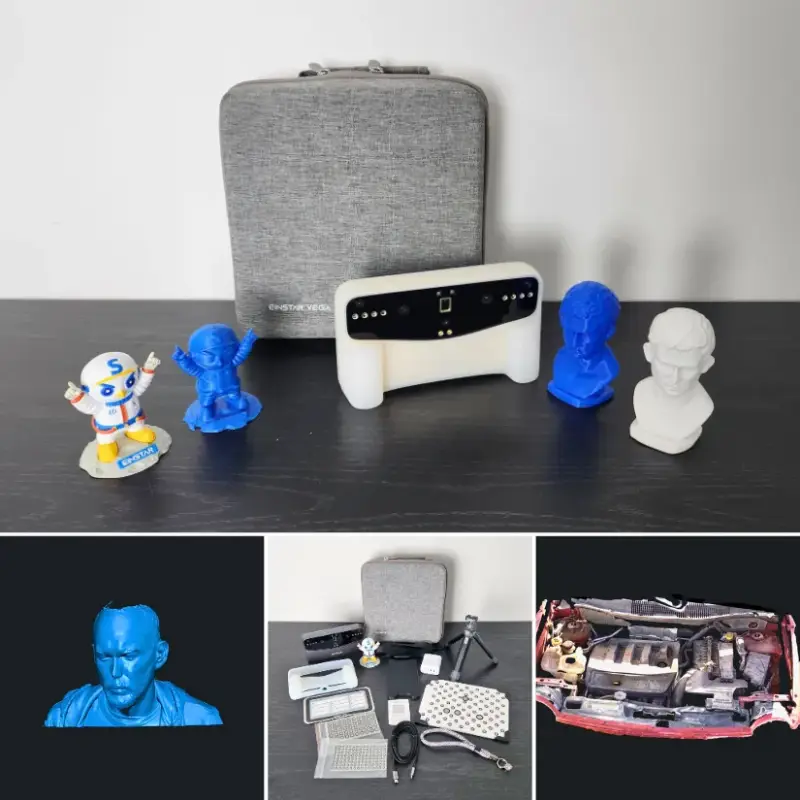
In a review by Will Zoobkoff, the VEGA is described as a strong portable scanner for small figures, body-part scanning for prosthetics or cosplay, and vehicle digitization. That account reports consistent results across those uses. The single-unit approach may suit operators who want capture and model handling in one device, while the Rigil Lite offers a separate path with explicit PC wired and wireless modes.
Across the range, the engineering trade-off is between portability, tracking method, capture speed and the amount of work handled on the scanner itself. EZ Go puts the phone at the center of the capture process; Rockit and EINSTAR 2 emphasize wireless handheld use; VEGA and Rigil Lite add standalone operation; EinScan Trak supports large-object tracking and detailed handheld capture within one project. The right fit depends on object scale, surface features, lighting and whether the next step is visualization, dimensional inspection or CAD reconstruction.