Blythe Masters to Chair Raspberry Pi Foundation Trustees from March 2027
- Published
- Author
- Philip Colligan, CBE
- Reads
- 723
Blythe Masters will take over as chair in March 2027, bringing financial, technology and nonprofit governance experience to the Raspberry Pi Foundation.
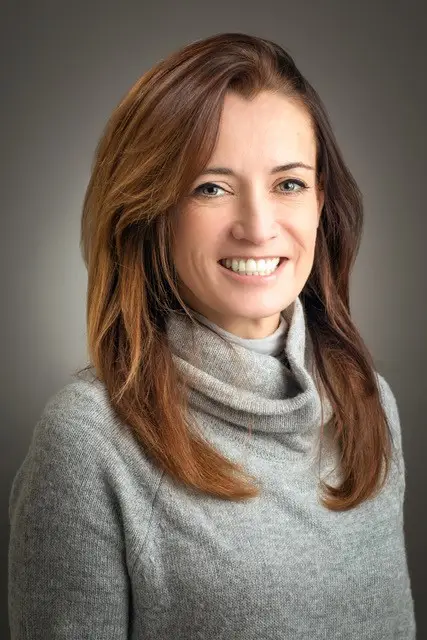
The Raspberry Pi Foundation’s board will gain a chair with experience spanning financial services, technology companies and nonprofit organizations when Blythe Masters takes up the role at the end of March 2027. Masters will succeed Sir John Lazar, who has led the Board of Trustees since 2020 and will stay on to support the transition.

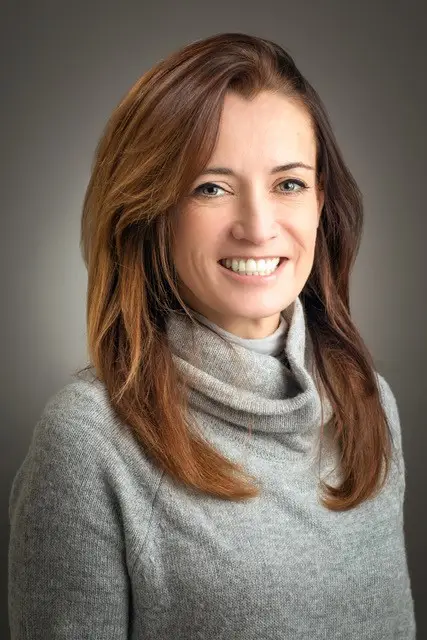
For a charity whose work centers on computing and AI education, the chair’s job sits at the intersection of organizational oversight and mission. The trustees are responsible for making sure the Foundation uses its resources effectively to advance its charitable goals. Masters’ background includes senior roles in finance, fintech and wealth technology, alongside board and nonprofit governance experience. That mix will be relevant to oversight of an organization working with educators and students across many countries.
Masters studied at Trinity College, University of Cambridge, where she was a Senior Scholar. She spent nearly three decades at JPMorgan, joining its Executive Committee and holding senior posts that included Chief Financial Officer of the Investment Bank and Head of Global Commodities. She left the company in 2014.
Her subsequent roles brought her closer to technology businesses. Masters served as CEO of Digital Asset, then became a Founding Partner at Motive Partners, a fintech-focused investment firm. Most recently, she was Group CEO of FNZ, a global wealth technology platform and Motive Partners portfolio company. Those positions add operational and technology-sector experience to a career that began in large-scale financial services.
Her board work has covered both financial and technology organizations. Masters currently chairs JPMorgan Securities plc and serves as a non-executive director at SymphonyAI. Earlier board positions included A.P. Moeller Maersk, Credit Suisse, Santander Consumer USA, Forge and GCM Grosvenor. The range of those roles gives her experience with different organizations and oversight responsibilities; the Foundation has not specified how she will apply that experience to its priorities.
Masters has also held nonprofit governance roles. She was co-chair of the Global Fund for Women, vice chair of ID2020, chair of the New York City chapter of the Susan G. Komen Breast Cancer Foundation, and chair of the Hyperledger Foundation, in addition to serving in other trustee roles. This record means her work with the Raspberry Pi Foundation will extend an existing involvement in mission-driven organizations.
Leadership transition and the Foundation’s remit
Lazar’s tenure began in 2020. During his time as chair, the Foundation has supported hundreds of thousands of educators and tens of millions of students worldwide in developing skills, knowledge and mindsets through computing and AI. The organization credits his leadership with helping it deliver that work, and says he will remain involved to manage the handover.
The transition period gives the incoming chair and existing board time to pass on organizational knowledge before Masters formally takes up the post. The Foundation has not provided further details about the handover or named specific changes to its programs. Its stated mission remains to help young people realize their full potential through computing and AI.
The Board of Trustees governs the Foundation as a charity and is accountable for ensuring its resources support its charitable goals. Trustees are volunteers and receive no remuneration for their service. They generally serve two terms of three years each. That structure places the chair within a volunteer board whose responsibilities include stewardship of the organization’s resources and direction.
Masters’ appointment brings a new set of professional and nonprofit experiences to that oversight role, while Lazar’s continued participation is intended to support continuity through the change. The practical measure of the transition will be how the board sustains the Foundation’s work with educators and students as it pursues its computing and AI mission. The Foundation’s Trustees and Members page lists its governance participants.