Astro Pi Builds Skills for the Space Engineers of 2076
- Published
- Author
- Philippa Hanman
- Reads
- 797
Astro Pi gives young people hands-on experience with space science while showing why future communications engineers will need software, hardware and systems expertise.
Reliable communication between Earth and Mars could depend on engineers who understand both the software and the physical systems carrying a signal across space. That future role, imagined by Geraint Ballinger of the Raspberry Pi Foundation, puts a practical emphasis on the skills young people can begin developing today: problem-solving, careful testing and knowing how a system behaves when hardware and software meet.
Imagining engineering work 50 years ahead
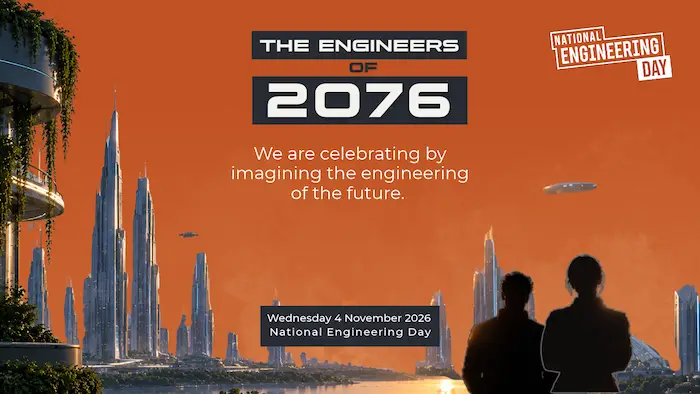
The Royal Academy of Engineering is marking its 50th anniversary by asking people to picture engineering jobs that might exist in 2076. Its imagined vacancies look toward work supporting life on the Moon, Mars and beyond. The exercise also connects those distant possibilities to present-day learning: tomorrow’s engineers need room to experiment, solve problems and gain confidence before they take on complex systems.
One route into that experience is the European Astro Pi Challenge, an ESA Education project run with the Raspberry Pi Foundation. Participants write programs that run on Raspberry Pi computers aboard the International Space Station (ISS), using them to carry out scientific investigations. The challenge gives young people a way to work with space science through code, while introducing constraints that classroom exercises may not capture.
Ballinger works on the challenge as a Software Development and Deployment Engineer. He describes the job as a combination of software engineering and teaching. The engineering task is to make it possible for young people to run code in orbit; the educational task is to remove unnecessary complexity so participants can focus on learning and solving problems. At the same time, software sent to the ISS has to be secure and meet the project’s requirements.
Building tools around the constraints of orbit
Ballinger develops applications and code libraries that handle routine tasks for participants. That lets them spend more time on the work that makes the challenge distinctive, such as taking pictures of Earth and investigating scientific questions. He also helps manage the flow of submissions, including reviewing participants’ work, moderating images for Mission Zero and building internal tools to make that review process more efficient.
His responsibilities extend to the software running on the ISS. He shares responsibility for delivering the Astro Pi operating system, preparing system updates and coordinating security reviews. He also develops applications for astronauts, including a tool used to focus the Astro Pi cameras. The work links software development to a physical computer operating in an environment where power, bandwidth and hardware condition all matter.
That mix gives the role an unusually broad range of problems. Ballinger says his work can shift from writing a Python library to developing a TypeScript web application, then to investigating a hardware fault such as a corrupted SD card. Maintaining a computer in orbit makes the physical platform impossible to ignore: solar radiation, limited power and bandwidth, and hardware degradation over a mission’s lifetime all shape the engineering choices.
Those constraints also affect how teams prepare software and hardware for use in orbit. A program has to work within the capabilities of the machine and the conditions around it. Ballinger says he has found the procedures involved in delivering software and hardware to space as interesting as the technical challenges themselves. For engineers, that is a reminder that reliable operation depends on the process around a system as well as the code it runs.
Testing accessibly and learning to debug
Physical access to flight hardware would be a barrier for most participants. Ballinger developed the Astro Pi Replay tool, a browser-based emulator that lets Mission Space Lab participants test code as though it were running on the ISS. It works on a standard school laptop, so students can check their programs without needing an Astro Pi computer of their own.
He also helps write the educational materials for participants and mentors. These resources introduce the main concepts needed for Mission Space Lab and are intended to help young people get started quickly, with the aim of producing working code within a few hours. Accessible testing and clear guidance make it easier for students to spend their effort on the investigation itself and on fixing problems they encounter.
Mission Space Lab, the more advanced of the Astro Pi missions, asks participants to divide complex work into manageable tasks and coordinate separate parts of a project as a team. Ballinger highlights problem-solving, patience, critical thinking and creativity as skills that carry into future space engineering. Since software bugs and technical failures are part of operating systems in space, participants also get practice debugging, building resilience and asking how the underlying system works.
A communications role across software and hardware
For a possible job title in 2076, Ballinger proposes an Interplanetary Communications Manager. If people have reached Mars by then, he reasons, a reliable connection with Earth would be essential infrastructure. The person responsible would need to work across software and hardware, with radio transmission among the physical systems involved.
Ballinger expects that work to build on radio and optical technologies already in use, rather than depend on a wholly new way to communicate across space. That points to a grounding in the physics of communication: how radio waves and light travel over long distances, and how networks can be designed to remain reliable. The job would also demand practical familiarity with the systems that turn those principles into a working link.
He expects artificial intelligence to affect many areas of engineering, but argues that a high-cost, high-consequence communications system would still need human oversight. Engineers would have to understand how it works and judge when its output can be trusted. For a future communications specialist, that understanding may be as important as the ability to develop the software or hardware in the first place.
The Royal Academy of Engineering invites people to create their own engineering role for 2076 and explains how to take part on its National Engineering Day resources page. Young people interested in the European Astro Pi Challenge 26/27 can visit astro-pi.org to choose a mission. The connection between those activities is concrete: future space systems will need engineers who have learned to test ideas, work through faults and understand the machines their code depends on.