DyeMansion Powershot Go Targets Compact Powder Bed 3D Printing Workflows
- Published
- Author
- Sam Davies
- Reads
- 575
The 15 l Powershot Go fits compact production spaces, handles full HP MJF 1200 build jobs and offers cleaning or surfacing media from day one.
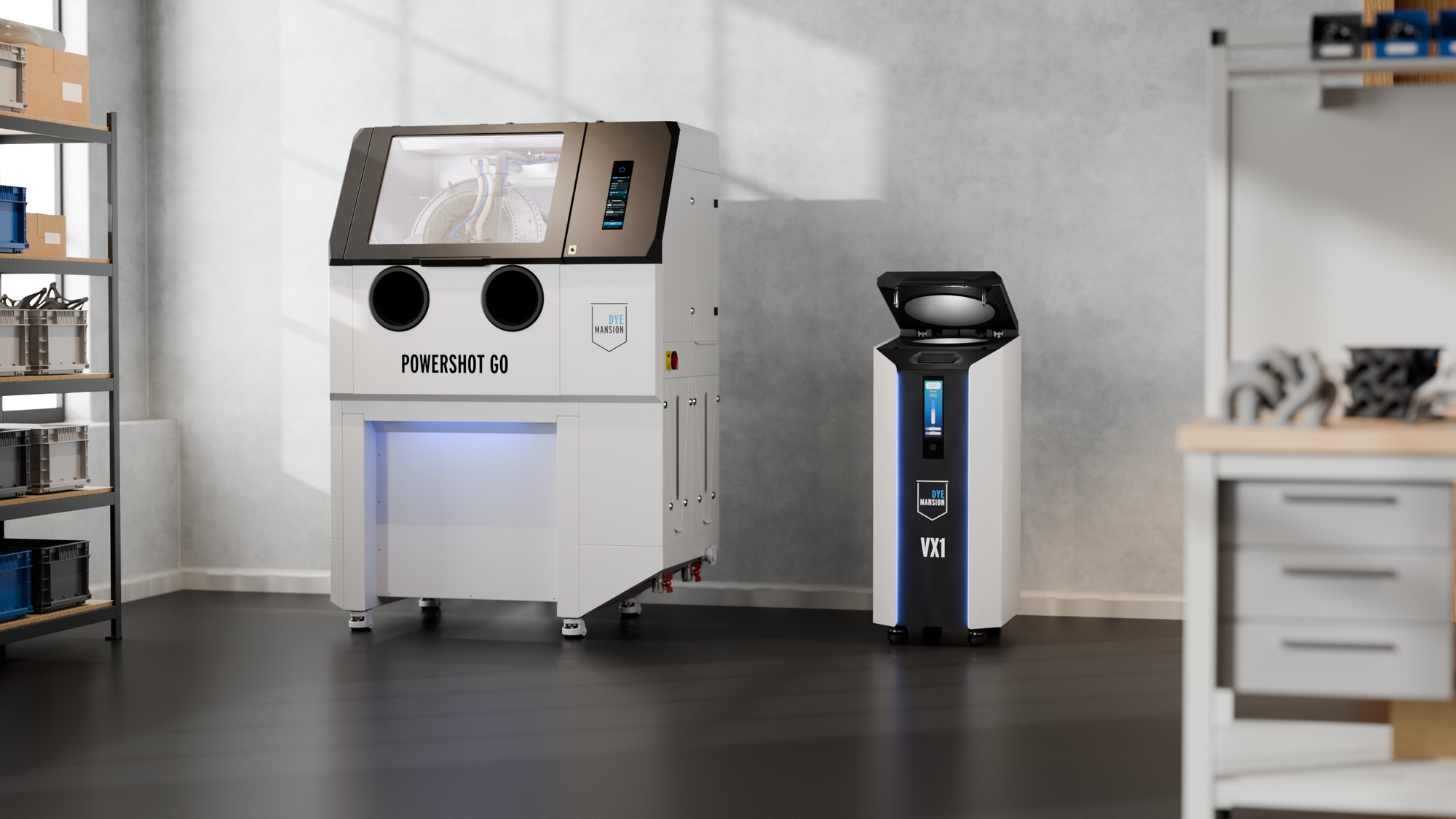
DyeMansion’s Powershot Go is aimed at a specific gap in powder bed production: post-processing capacity sized for compact industrial printers and smaller batches. Its 15 l effective volume is intended to take a complete build job from HP’s MJF 1200 in one run, while occupying about 2.6 m2 of floor space. The machine brings cleaning and surface finishing into a smaller footprint than the established Powershot X, according to DyeMansion.
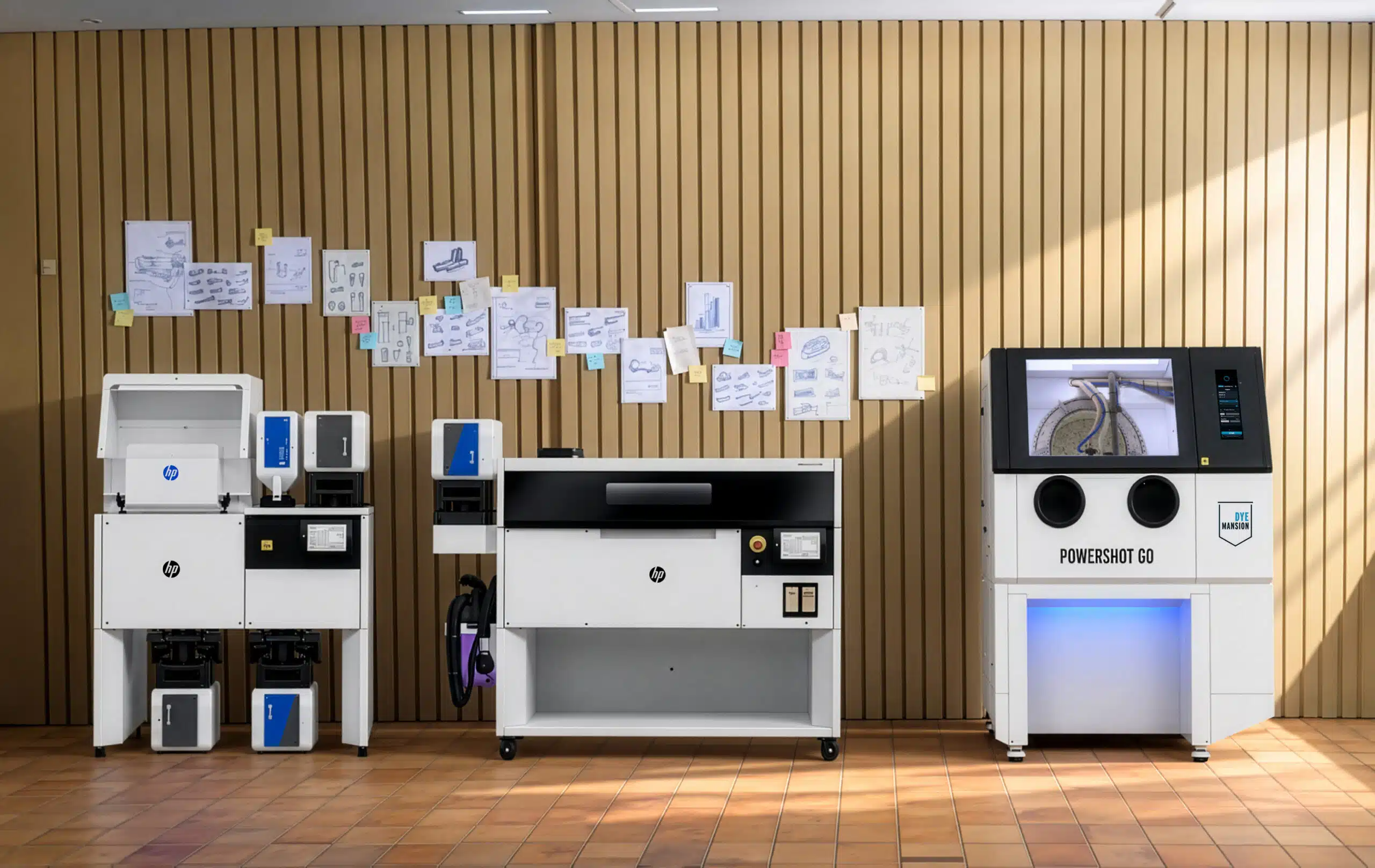
The company developed the system with HP, and it has been validated as an HP Qualified Solution for the MJF 1200. DyeMansion says the Go can also be used with other powder bed printing technologies. That makes the system relevant to shops choosing equipment around build capacity and production volume, though the stated full-build fit applies specifically to the HP MJF 1200.
One machine, two finishing media
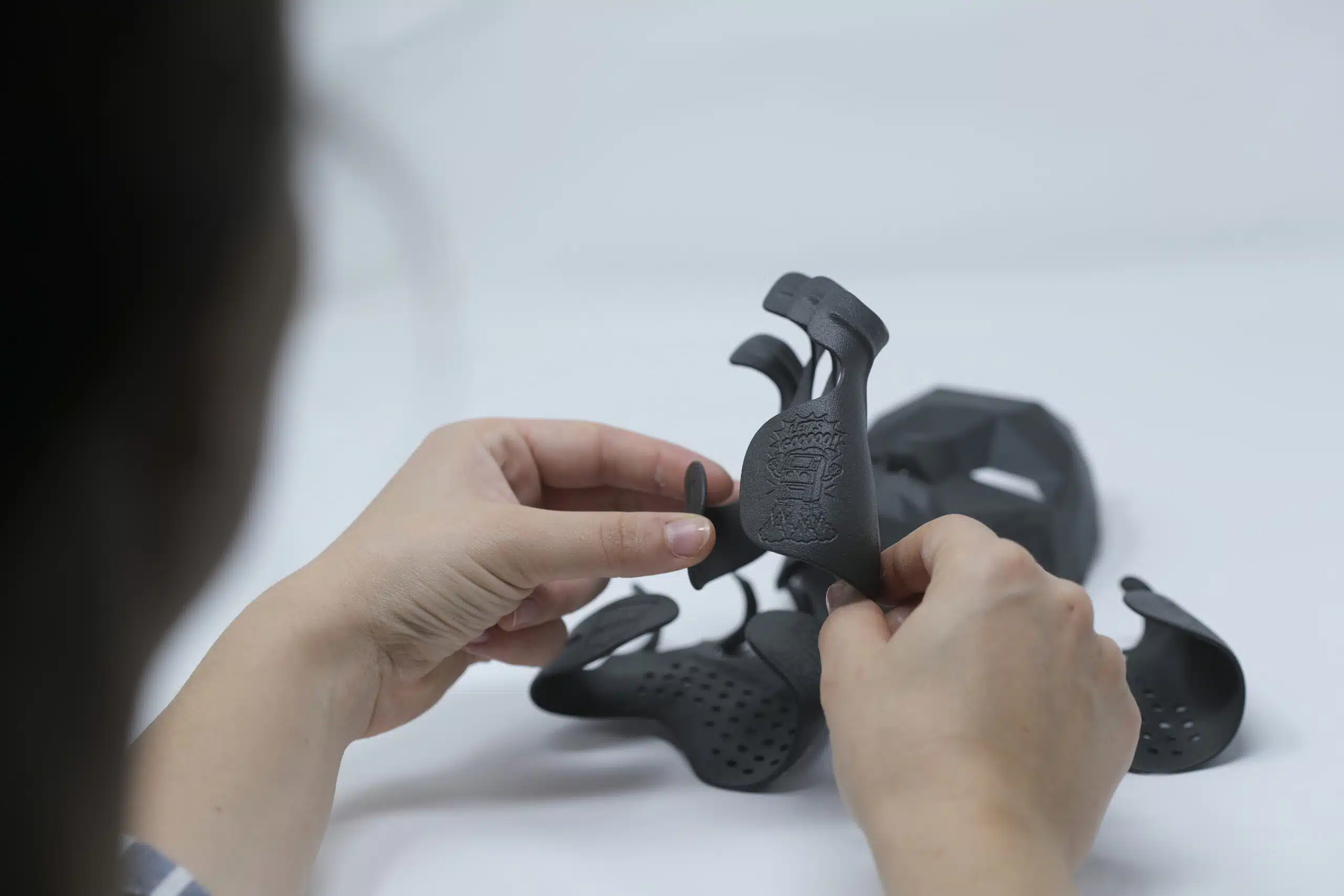
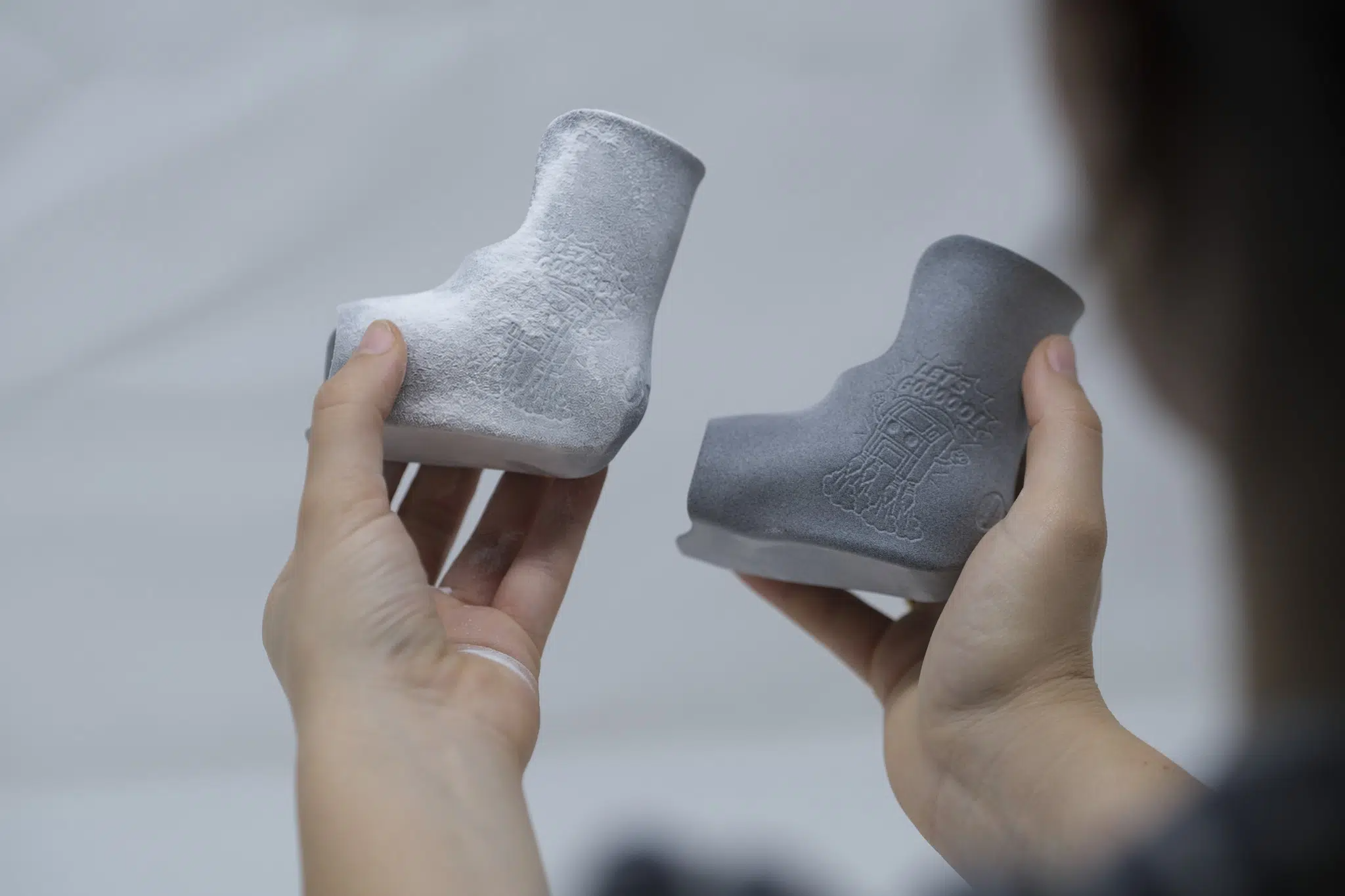
The Powershot Go uses either glass or plastic media, one type at a time. Glass media support PolyShot Cleaning, which automatically removes residual powder and prepares parts for later steps such as colouring or vapour smoothing. Plastic media combine powder removal with PolyShot Surfacing. DyeMansion describes the resulting surface as semi-glossy, with improved scratch resistance and a smoother feel than the porous appearance associated with untreated powder bed parts.
Both media types are included from the outset, with no paid upgrades required to access either process. That gives operators a choice between cleaning parts for subsequent finishing and combining cleaning with surfacing in the same machine. The available description does not specify cycle times, media consumption, or part-by-part capacity, so those details will matter when shops compare throughput against their own build schedules.
Positioned between lab work and batch production
DyeMansion frames the Go for labs, small shops, users with limited budgets and decentralised production across multiple locations. The company says it has low compressed-air and electrical infrastructure requirements, needs minimal self-maintenance and is designed for intuitive operation. Those attributes could help sites that need to finish printed parts without dedicating the space or support resources associated with larger production equipment.
The Go sits below DyeMansion’s other Powershot systems in stated usable basket volume. The Powershot X provides 26 l, almost twice the Go’s 15 l effective volume, for mid-size batch production. For serial production with higher automation requirements, the Powershot DUAL Performance offers 55 l of usable volume and additional automation features. In practical terms, the choice turns on batch size, automation needs and whether one printer build fits within the available finishing capacity.
The machine has a 57 l basket, while DyeMansion specifies 15 l as its effective volume. The company calls that the largest usable volume in its class, within an approximately 2.6 m2 footprint. Those figures describe the machine’s capacity and space claim; actual output will also depend on the geometry and loading of the parts being processed.
A compact post-processing line
Paired with DyeMansion’s VX1 vapour smoothing system, the Powershot Go forms the company’s compact industrial line. The combined workflow covers depowdering, blasting and vapour smoothing for compact industrial powder bed printers. For a smaller production site, bringing these steps together as a defined equipment line may simplify planning for finishing space, although the two machines still represent distinct process stages.
A cited application is small-batch work in pediatric orthotics and prosthetics workshops. DyeMansion also points to decentralised production across several sites as a fit for the Go’s low infrastructure requirements and limited maintenance needs. These are use cases presented by the manufacturer; suitability for a particular part or workflow will depend on the required surface, production volume and finishing sequence.
Felix Ewald, DyeMansion’s CEO and co-founder, said the Go brings the Powershot X’s quality and approach to the compact industrial powder bed segment, which he described as gaining importance with companies including HP and Formlabs. He said working with HP helped shape the system around market needs. François Minec, HP Additive Manufacturing Solutions’ VP and global head of sales and business development, said qualifying the Go extends the MJF 1200’s compact production concept into post-processing, enabling customers to print and finish parts in-house.
DyeMansion is showing the Powershot Go and its capabilities at Formnext. Orders are being accepted, with the first machines scheduled for delivery in Q1, 2027. Prices start below 17,000 USD. For shops evaluating compact powder bed production, the key question is whether the 15 l effective capacity and single-build fit with the MJF 1200 align with their part mix and finishing demand.