Tektronix EA-ELR 21000 Regenerative Load Tests 800V Data Centre Power Systems
- Published
- Author
- Saba Aafreen
- Reads
- 988
Tektronix’s EA-ELR 21000 simulates fast-changing loads on 800V DC systems and returns up to 95% of absorbed test energy to the grid.
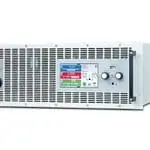
Testing high power systems against rapidly changing loads can consume substantial energy and produce substantial heat. Tektronix’s EA-ELR 21000 Dynamic Test System is designed to address both concerns while validating 800V DC power equipment intended for AI data centres. The platform combines programmable dynamic loading with regenerative operation, returning up to 95% of the power it draws from the device under test to the grid, according to Tektronix.

The target equipment includes power shelves, power racks and solid state transformers. These systems must respond as computing demand changes, so a steady load test alone may not show how the power path behaves during abrupt shifts. A dynamic electronic load lets engineers apply changing demand and examine the equipment’s response under those conditions.

Load simulation with energy recovery
The EA-ELR 21000 uses an electronic load module to draw power from the equipment being evaluated. In a conventional electronic load, much of that energy is dissipated as heat. Tektronix’s regenerative approach sends up to 95% of the absorbed energy back to the grid, reducing the amount converted into heat during testing.

That distinction matters in extended test sessions and in facilities running multiple high power test channels. Recovering energy can reduce cooling burden around the test setup as well as the energy lost in the load itself. The stated recovery figure is a manufacturer specification; the available information does not give operating conditions or a measurement method for that percentage, so test teams will need the detailed product documentation to assess it against their own installation.
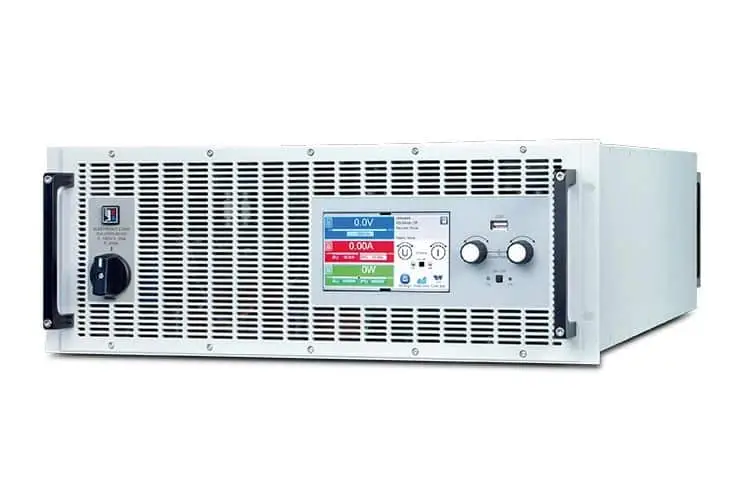
The listed EA-ELR 21000-80 4U HS module is rated for up to 1000V, 80A and 30kW. Those ratings describe the individual module, while the wider system can be built from multiple modules and racks. Matching the load’s voltage and current envelope to the device under test remains central to a valid test setup.

Fast changes for power shelf and rack validation
Tektronix specifies current slews of 12A/µs and a system power level of 240kW for dynamic load changes. The slew rate indicates how quickly the load can change current, a useful capability when engineers need to exercise the response of power conversion stages, distribution paths and control loops under transient demand.
For data centre power equipment, the practical question is whether a shelf or rack maintains stable operation when its load shifts quickly. Engineers can use dynamic profiles to observe voltage behavior, recovery and other performance measures during those transitions. The announcement identifies stability, efficiency and reliability as areas the tests can help assess, but does not provide test waveforms, acceptance limits or measured results. Those details will depend on the validation plan and the equipment under test.

The 800V DC focus also gives the system a defined application area: testing equipment built around that distribution level. The module’s stated maximum of 1000V provides voltage headroom relative to an 800V bus, though actual test limits must follow the equipment ratings and the instrument’s operating guidance. The product announcement does not specify interfaces, control software, accuracy, or compatibility with particular power shelves and racks.

Scaling capacity in 30kW steps
The system is modular. A rack provides 240kW of load capacity and can be expanded in 30kW increments. Tektronix says up to eight racks can be combined for a total system capacity of 1.92MW across 64 loads. That arrangement allows a test facility to increase capacity as its validation needs grow, while keeping individual modules serviceable.
Service at module level can help limit the scope of maintenance when one load module needs attention. The source information does not describe replacement time, redundancy behavior or whether a module can be serviced while the rest of a rack continues operating; those are practical details to confirm during system planning.
For engineers evaluating high voltage DC infrastructure, the notable combination is the fast current slew capability, rack scale capacity and energy recovery. The EA-ELR 21000 gives test teams a way to apply changing loads without turning nearly all absorbed energy into room heat. Tektronix announced the system on November 13, 2026; detailed operating conditions and integration requirements will determine how closely its published ratings fit a particular test program.