Kaimou GS2.3 Global Shutter Sensor Combines 120 fps Imaging and Camera Sync
- Published
- Author
- Saba Aafreen
- Reads
- 579
Kaimou’s 2.3 MP GS2.3 pairs 120 fps global shutter capture with external camera triggering and near-infrared sensitivity.
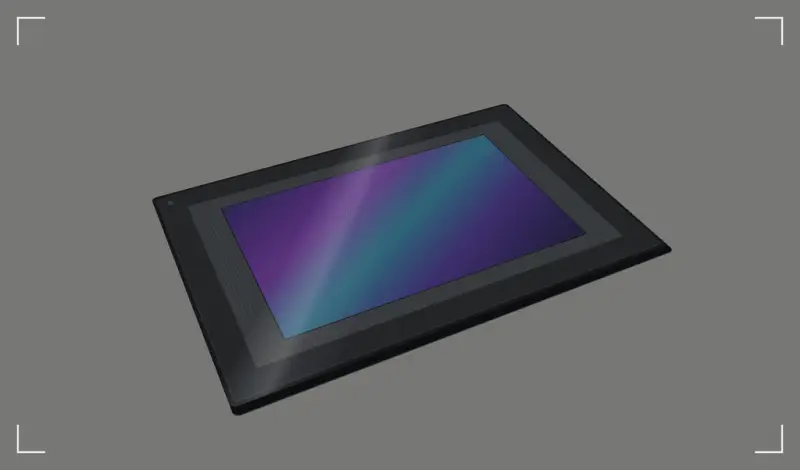
For robot vision, a camera’s timing can matter as much as its resolution. Kaimou Semiconductor’s GS2.3 combines a 2.3-megapixel global shutter sensor with frame rates up to 120 fps and external triggering, aiming to help camera systems capture moving objects without the distortion associated with rolling shutter readout.

The GS2.3 is intended for robot cameras, machine vision and barcode readers. Its 1920 × 1200 pixel image gives system designers a defined resolution and frame rate to work around, while the global shutter architecture captures the frame at once. That can be useful when a robot or inspection system needs image data from a moving scene: with rolling shutter sensors, different image rows are exposed at different times, which can make a moving object appear skewed. A global shutter avoids that particular source of geometric distortion.

Timing cameras across a system
The sensor’s external FSYNC input supports simultaneous triggering of multiple cameras. In a multi-camera setup, a common trigger can coordinate exposure timing across views, making it easier to compare images captured from different positions at the same moment. That capability is relevant to systems that combine cameras for inspection or robot perception, though the full synchronization behavior will depend on the camera design and how the external trigger is implemented.
The GS2.3 can also operate in free-running master mode. This gives designers another way to configure acquisition when a camera does not need to follow an external trigger source. The choice between externally triggered capture and free-running operation will depend on the timing requirements of the wider system.

At up to 120 fps, the sensor can deliver frequent frames for tracking fast motion. That frame rate is a ceiling specified for the device; the source does not give test conditions or detail how resolution, interface settings or exposure affect achievable throughput. Engineers evaluating it will need to check the full camera implementation, including the host’s ability to receive and process the image stream at the intended rate.
Pixel format and near-infrared response
Kaimou offers monochrome and RGB versions. The sensor uses a 1/2.6-inch optical format and 3 µm pixels. The monochrome version is specified for quantum efficiency of 44.6% at 850 nm and 24.9% at 940 nm, figures that point to near-infrared response at those wavelengths. The numbers apply to the monochrome model; no corresponding RGB sensitivity figures are provided.

Image data can be output as RAW8, RAW10 or YUV422 over MIPI CSI-2. RAW formats give the downstream image pipeline access to sensor data at the selected bit depth, while YUV422 supplies a formatted color representation. The available options let system designers weigh data handling and processing needs, but the stated information does not specify the interface lane rate or the bandwidth required at 120 fps.
The sensor also includes automatic exposure and gain control, plus black level adjustment, defective pixel correction, lens shading correction, gamma correction, sharpening and noise reduction. Scaling and windowing are supported, along with as many as four regions of interest. These functions give the camera pipeline ways to tailor image output and limit processing to selected parts of the field of view. Their availability is useful during integration, although the amount of control exposed to a camera’s host software is not specified.
Power, package and development path
The nominal digital supply is 1.2 V. In 120 fps mode, the specified supply voltage rises to 1.5 V. Kaimou gives active power consumption of 331 mW at 120 fps with a four-lane MIPI interface. That figure provides a useful starting point for power budgeting, but the source does not give consumption at other frame rates or operating modes. Camera designers will also need to account for the rest of the module and its thermal and power requirements.
The device comes in a chip scale package measuring approximately 8.02 × 5.40 mm. Its optical format, pixel pitch and package dimensions give designers initial constraints for optics and board layout. Final camera dimensions and image quality will also depend on the selected lens, mechanical stack-up and module design.
Samples are expected in Q4 2026 at around $45, with volume production planned to start in Q2 2027. Camera modules and evaluation boards are available from partners using Raspberry Pi 5 and Luckfox Aura. These options may give developers a route to evaluate the sensor within existing platforms, subject to module availability and compatibility with their software and interface requirements.
The GS2.3’s most practical combination is its global shutter capture, external frame synchronization and stated near-infrared response in a compact sensor package. For teams comparing camera components, the next checks are the detailed timing and interface specifications, the performance of the chosen module, and whether its trigger behavior fits the system’s image acquisition plan. Kaimou Semiconductor provides product information.