Eseye Adds Local and Regional Profiles to Its SGP.32 IoT Connectivity Offer
- Published
- Author
- IoT.Business.News
- Reads
- 729
AnyNet Select expands profile options across Brazil, the US, Africa and Europe, with managed, self-service and third-party profile models.
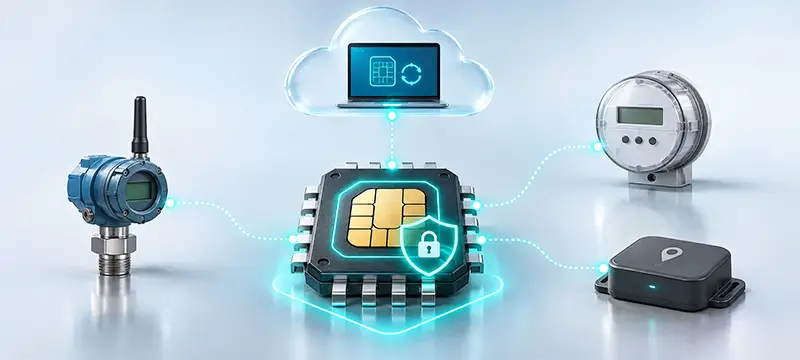
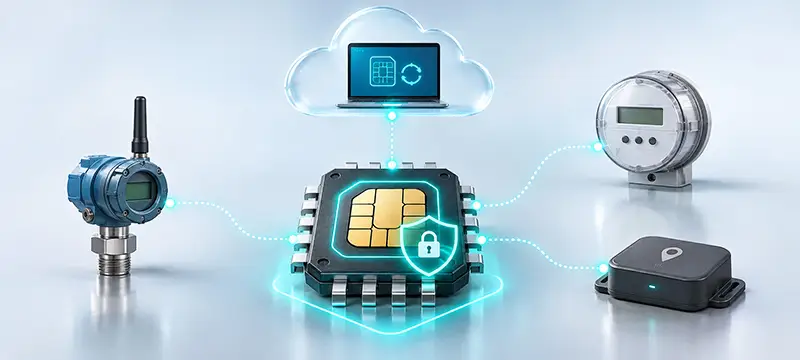
AnyNet Select adds local and regional profiles to Eseye’s SGP.32 offer, alongside managed connectivity, orchestration and options for direct profile control.
For IoT operators expanding across markets, the useful change in SGP.32 is the ability to manage connectivity profiles over a device’s lifetime. Eseye’s newly launched AnyNet® Select adds more local and regional profiles to that choice, initially covering Brazil, the US, Africa and Europe. The portfolio is intended for enterprises, mobile network operators (MNOs) and mobile virtual network operators (MVNOs).
The practical value depends on more than having profiles available. Teams need a way to select, provision and manage them as devices move between markets or requirements change. Eseye positions AnyNet Select within its broader AnyNet® for SGP.32 offer, which combines profile access with orchestration, connectivity resilience and operating models that range from fully managed service to direct customer control.
Profile choice with different operating models
Enterprises can use Eseye’s managed service, in which the company handles profile selection and orchestration as well as provisioning, infrastructure, monitoring, billing and support. Customers seeking more direct control can select and manage profiles through Infinity, Eseye’s platform, or through an API. The same profile portfolio is available to MNOs and MVNOs looking to extend or complement their own connectivity footprint.
For MNO and MVNO partners, Infinity is also described as a shared management and orchestration layer across multiple eIMs, including eIMs operated on their behalf. An eIM manages the remote delivery of profiles to compatible devices. That layer can help partners coordinate profile operations across systems while offering customers a broader set of local connectivity options through a consistent global service.
The offer also allows compatible third-party SGP.32 profiles to be incorporated through multiple eIMs managed in Infinity. That gives enterprises a way to include existing or new operator relationships in their connectivity plans. In practice, the usefulness of this flexibility will depend on profile and device compatibility, as well as how the customer chooses to divide operational responsibility.
Customers can begin with managed connectivity and later take on more profile management themselves, or extend their setup with compatible third-party profiles. Eseye frames that ability to change the operating model as a way to accommodate shifts in deployment scale, market needs and internal expertise. It gives engineering and operations teams room to evolve the connectivity arrangement without requiring every device to follow one fixed profile strategy.
Orchestration and recovery matter at scale
SGP.32 gives enterprises more freedom to download, enable and change profiles during a device’s service life. Yet profile flexibility alone doesn’t guarantee that devices stay reachable or that a profile change will fit the operating conditions. Eseye’s broader proposition pairs its profile portfolio with orchestration rules that can account for location, coverage, cost, local requirements, and profile or network availability.
The service also combines operational profiles with bootstrap and fallback connectivity. These connections are intended to support profile delivery, device reachability and service recovery. They address a practical dependency in remote connectivity management: a device needs a working path to receive a new profile or recover service when its active connection is unavailable.
Eseye says supported AnyNet® profiles operate within a common global connectivity environment, using one APN, one API and its global private network. A consistent network arrangement can simplify the integration work that comes with changing profiles, though deployments still need to account for their devices, applications and chosen profiles. The offer builds on Eseye’s existing AnyNet® eSIM connectivity, and customers can choose between its managed service and more direct control.
Deployment depends on the wider device ecosystem
Eseye also works with customers’ OEM partners and other IoT ecosystem participants on SGP.32 deployment across devices, connectivity, manufacturing and operations. That coordination matters because profile management touches several parts of a product’s life: the device must support the relevant connectivity approach, its production process must accommodate the selected configuration, and operations teams need a workable way to manage profile changes after deployment.
Matt Hatton, founding partner at Transforma Insights, described the wider operational picture in a comment on the role of eSIM orchestration. “SGP.32 creates much greater flexibility around profile management, but enterprises also need to think about the wider operational, commercial and compliance implications,” he said. He added that providers able to bring those elements together could help simplify global IoT connectivity.
Hatton’s observation points to the central trade-off: profile choice can make localisation and adaptation easier, while also adding choices that have to be managed across devices, networks and commercial arrangements. The value of AnyNet Select will therefore turn on how well its profile options match each deployment and how effectively the orchestration and recovery services support day-to-day operations.
For teams planning SGP.32 deployments, the offer presents three linked decisions: which local or regional profiles fit each market, how much profile management to run internally, and whether compatible third-party profiles belong in the mix. AnyNet Select expands the available profile set; Eseye’s broader proposition supplies the management and connectivity services around it. The next practical measure will be how those pieces work together across real device fleets and operating conditions.