Hikrobot CI Series LWIR Cameras Add Thermal Inspection to Production Lines
- Published
- Author
- Saba Aafreen
- Reads
- 360
Hikrobot’s CI Series combines 640 × 512 thermal imaging, up to 50 fps and GigE connectivity for automated inspection in electronics, automotive and battery production.
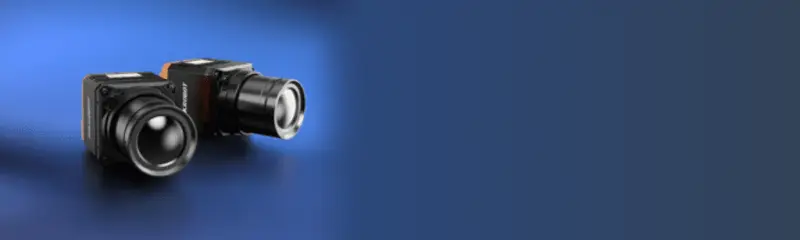
Hikrobot’s CI Series brings long-wave infrared imaging into machine-vision systems, giving production teams a way to monitor temperature patterns as parts move through inspection. The cameras capture localised heating that a visible-light camera cannot show directly, which can help flag thermal anomalies for further investigation in battery, automotive, electronics and semiconductor manufacturing.

The key engineering distinction is the sensor. Rather than recording reflected visible light, the CI Series uses an uncooled vanadium oxide (VOx) detector to capture infrared radiation across the 8–14μm wavelength band. The resulting image maps temperature variation across a target. That makes thermal data available as part of an inspection process, alongside conventional visual checks where the application calls for both.

Thermal detail and line speed
Baseline models provide a thermal resolution of 640 × 512 pixels and operate at up to 50 frames per second. Those figures define the image detail and acquisition rate available for monitoring a moving process; the useful result in a specific inspection station will also depend on the field of view, camera placement and the size of the temperature feature being examined.

Selected models specify automatic temperature measurement accuracy of ±2°C or ±2% of the reading. These are alternative accuracy terms stated for the relevant versions, so model selection should be matched to the measurement range and inspection requirement. The available specifications don’t establish one accuracy figure for every camera in the series.

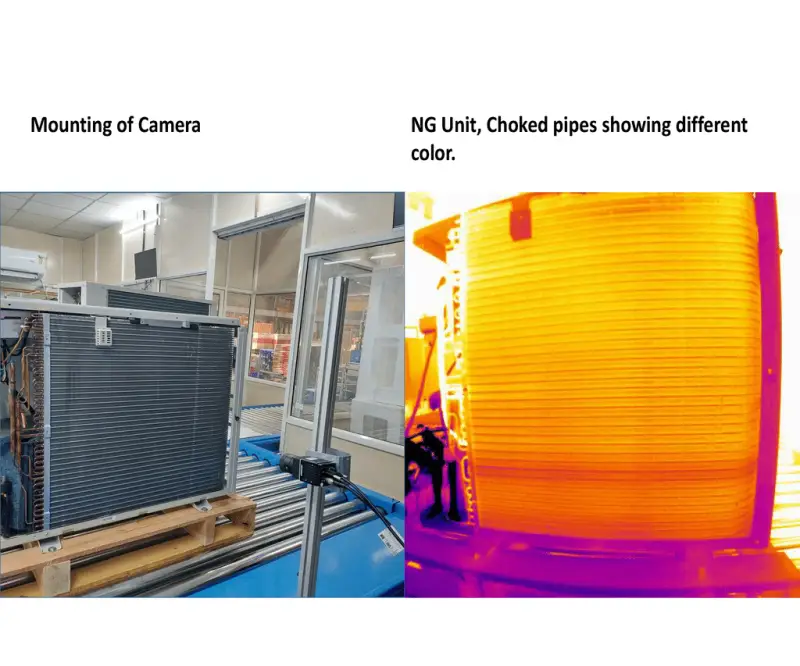
Thermal inspection is useful when temperature itself carries information about a component or process. A local hot region can indicate a condition that merits review, while a broader thermal pattern can show how heat is distributed across a part. The camera supplies measurements and images for an inspection system to evaluate; interpreting an anomaly still depends on the process, its acceptable limits and the criteria set by the manufacturer.
Interfaces and physical integration
For line installation, Hikrobot specifies a GigE interface for data transmission over distances up to 100 metres without an external relay. The cameras support GigE Vision 2.0 and GenICam, standards that help connect machine-vision hardware to third-party software. This can make the camera easier to incorporate into an existing vision setup, subject to the software and system configuration used at the plant.

Multiple trigger modes and event outputs provide ways to coordinate image capture with production events. The cameras also offer different imaging palettes and grayscale detection. Those options affect how thermal information is presented or used by the inspection system, while the trigger and output functions support synchronisation with other equipment on the line.

The housings have mounting holes on four sides, giving machine builders several options for securing a camera within an inspection station. That flexibility can help when the line layout constrains the viewing angle or available mounting surface. As with any fixed camera installation, the chosen position and lens determine which part of the target fills the image and whether the feature of interest can be resolved.
Lens options shape coverage
The CI Series includes variants with focal lengths of 6.3mm, 15mm, 25mm and 35mm. The 6.3mm model has a stated field of view of 88.5 × 73.2 degrees, while the 25mm version provides a narrower 24.6 × 18.5 degrees view. These options let system designers choose between broader scene coverage and a tighter view, depending on the distance to the target and the inspection area that must fit within the frame.
A separate model, MV-CI003-GL-T6, is specified for inspection and automated temperature calibration. Its designation points to a distinct configuration within the range; the supplied details don’t state further calibration procedures or performance conditions, so those need to be checked against the model’s technical documentation when designing a measurement station.
Where the cameras fit
Hikrobot positions the series for new-energy production, automotive parts manufacturing, and electronics and semiconductor applications. Battery production is one stated use, where temperature differences can help identify areas that warrant examination. In automotive and electronic component inspection, thermal images can similarly add process information that ordinary images do not provide.
The practical value will depend on whether temperature is a meaningful indicator for the part or operation being inspected. Resolution, frame rate, lens field of view, measurement accuracy and integration protocols are the specifications to weigh together when matching a CI Series camera to a station. With those choices made, thermal imaging can add a temperature channel to production inspection and help teams spot patterns that would otherwise remain invisible.