3D Systems MJP 300 Adds Three-Lane Builds and New Material Modes
- Published
- Author
- Sam Davies
- Reads
- 392
The MJP 300 pairs a 294 x 211 x 144 mm build volume with selectable speed and surface-finish modes, fleet tools and five VisiJet materials.
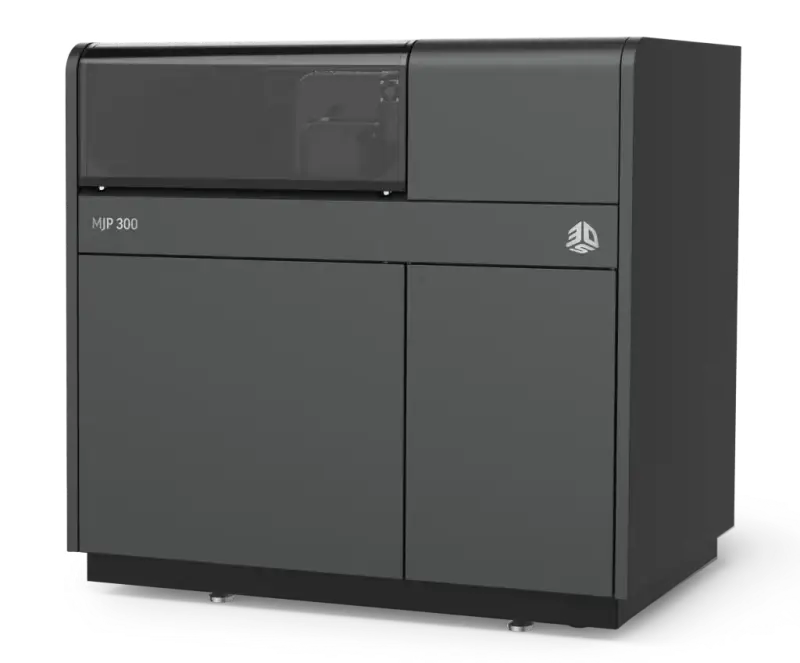
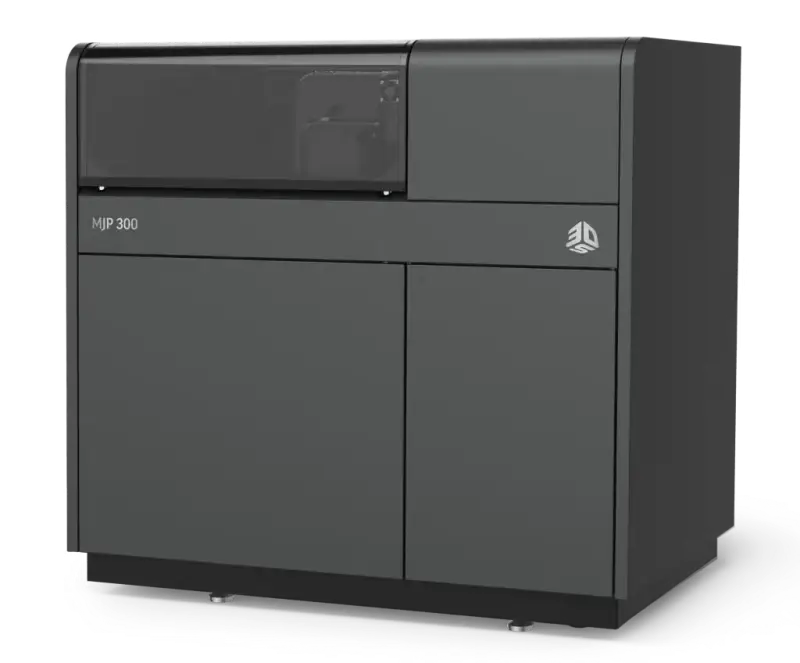
Build planning is the main practical change in 3D Systems’ MJP 300: its 294 x 211 x 144 mm build volume can be split into three lanes, and its build modes let users choose between faster production and finer surface results. The multijet system was introduced at Formnext 2026 and is scheduled to become available for purchase in the first quarter of 2027.
That combination is aimed at shops producing plastic parts that need different priorities from one job to the next. A speed-focused mode can suit work where throughput matters most, while sharper or smoother modes provide another choice when part appearance or detail takes priority. 3D Systems has not provided comparative build times or surface measurements, so the practical difference between modes will need to be judged against the parts and settings used in a specific workflow.
Three lanes for mixed part layouts
The build area measures 294 x 211 x 144 mm. Dividing it into three lanes gives operators a way to group small or tall parts within a lane, rather than treating the build volume as one undifferentiated layout. 3D Systems says this arrangement can support production speed without sacrificing quality. The company hasn’t published lane dimensions or detailed packing rules, so users will need to assess how their part geometry and chosen build mode affect usable capacity.
For production planning, lane-based grouping can make it easier to organize a build around parts with similar dimensions or requirements. The stated benefit is the ability to place small or tall parts together in a lane. That gives operators another layout option when a job includes mixed geometry, although the source information does not specify how many parts fit in a typical build or quantify any change in throughput.
The MJP 300 is designed for rapid plastic-part production and is described by 3D Systems as easier to operate. Updated electronics are intended to process data faster, while new software and fleet management tools expand the machine’s operational support. The company also describes the platform as offering improved accuracy, surface finish, ease of use and security; it has not published test conditions or numerical comparisons for those claims.
Material and software options
Compatible materials include M2P-CST Crystal, which is offered in XHD and a very high-speed HD mode for high-definition parts. The machine also supports five VisiJet acrylate materials: M2P-Crystal, M2R-WH, M2R-CL, M2R-TN and M2R-HT90. 3D Systems says more materials will follow. Its growing M2R materials suite is also set to add XHD, a finer-resolution mode, for each material.
Those options give users a material and mode set to consider alongside the part’s intended finish and the time available for a build. The announcement does not provide material property data, application-specific recommendations or comparisons between the named materials. Teams evaluating the system will need those details to determine whether a material suits their part requirements.
The MJP 300 works with 3D Sprint printer management software. The package now includes .finite, a digital rights management tool intended to protect intellectual property in 3D data. 3D Systems has also introduced AddiTrak for monitoring and managing its printer fleet. Together, the software additions address data handling and oversight across machines; the company has not described specific integrations or the controls available to users.
3D Systems says the machine incorporates enhanced cybersecurity features designed to support compliance with ESA/IEC standards. The announcement does not identify the specific standards or explain how the features are implemented, so buyers will need further technical documentation to assess fit with their own systems and requirements.
What to assess before purchase
The MJP 300 will be displayed at Formnext 2026 in Hall 11.0, stand D11, with sales expected to begin in the first quarter of 2027. For a prospective user, the key points to examine are how the selectable modes affect part quality and throughput, how the three-lane layout works with actual job files, and which supported materials meet the intended application’s requirements.
Martin Johnson, 3D Systems’ vice president, product and technical fellow, described the MJP 300 as a new generation of multijet printing, citing updated electronics and software and a platform that can scale. The company has not stated a price, detailed machine footprint, or quantified performance benchmarks in the announcement. Those specifications, alongside material data and mode-specific results, will help shops determine whether the machine’s workflow and capacity match their production needs.