Raise3D RMS220 SLS Printer Gains 100 mm of Build Height Through Free Update
- Published
- Author
- TCT Team
- Reads
- 798
The RMS220’s added Z height expands its build volume to 21.8 litres; Raise3D also plans to show its B520 batch sandblaster at Formnext 2026.
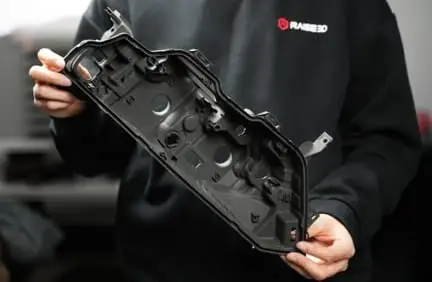
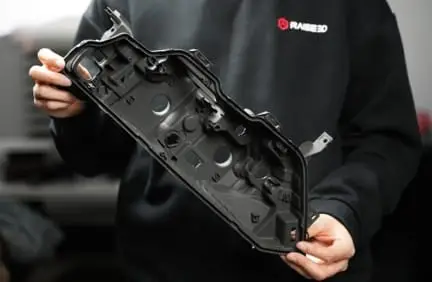
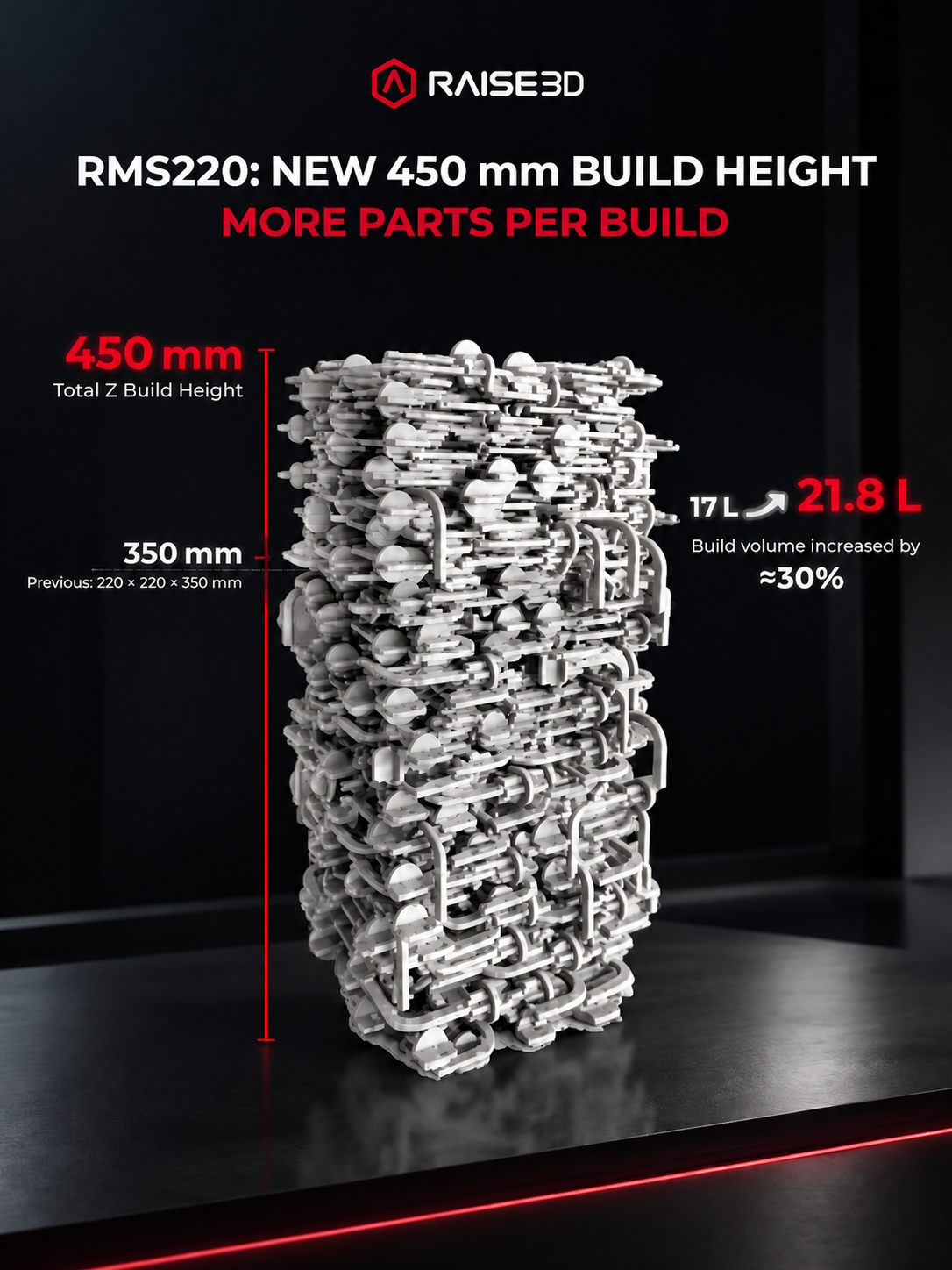
Raise3D is increasing the RMS220 selective laser sintering printer’s available build height by 100 mm, taking its stated build envelope to 220 × 220 × 450 mm. The software and firmware update raises nominal build volume from 16.9 to 21.8 litres, nearly 30%, and requires no hardware changes. The company says the update will be available to existing RMS220 owners free of charge on 17 November 2026.
That extra Z capacity can help with tall components, but its production value may be just as significant when used to arrange more parts in a batch. Raise3D will present the updated printer at Formnext 2026 in Frankfurt alongside the B520 sandblaster, bringing attention to a practical constraint in polymer powder-bed production: added printer capacity helps only if cooling, unpacking and finishing can keep pace.
One taller envelope, two production uses
Raise3D demonstrated the added height with a 450 mm automotive light cover printed as one piece in PA NEXT powder. A component with a long, visible surface can benefit from avoiding a join: the design no longer needs separate sections aligned and bonded, and the finished surface has no seam at that joint. Removing the joining step can also reduce assembly labour and post-processing. A bonded interface can be a weak point, so eliminating it may help preserve structural continuity, depending on the part design and its intended use.
The example makes the height increase easy to visualize, though it isn’t the only way to use the enlarged envelope. More Z space can give engineers additional options for part orientation, which may help them position critical surfaces or dimensions to suit a particular build. The usable space still depends on component geometry and the design and print guidelines for the selected material; the nominal envelope alone doesn’t determine how a job should be arranged.
For smaller components, the vertical space can instead hold additional parts at different heights. In SLS, unsintered powder around the components supports them during the build, allowing parts to be arranged within the powder bed. A service bureau producing repeat orders might fit more pieces into a run, while an in-house team could combine compatible fixtures, housings and spare parts. Those parts still need to suit the same material and process profile.
Raise3D estimates a 25–30% throughput increase in typical small-batch production scenarios. That figure is the company’s estimate, not a guaranteed gain for every job. The result will depend on how efficiently the parts can be nested, the print time added by building higher, and the time required for cooling, cleaning and finishing. More parts in a chamber can reduce the number of separate builds needed for an order, but it also increases the amount of output that downstream stations must handle.
Printer capacity depends on the rest of the workflow
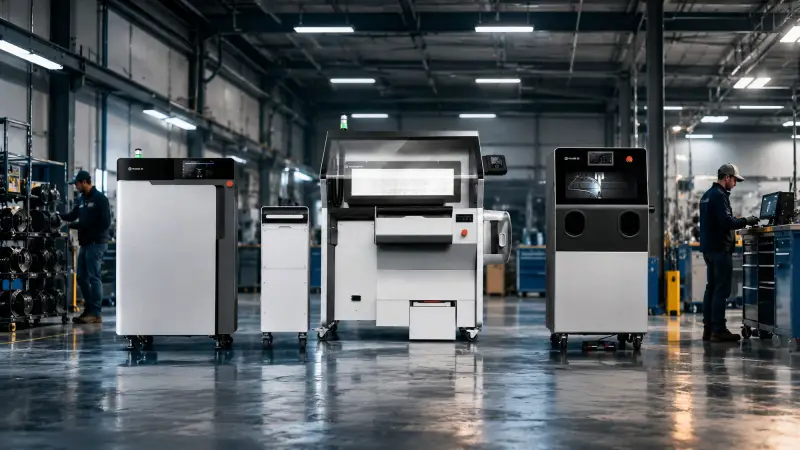
The RMS220 uses interchangeable Build Unit 220 chambers to let cooling overlap with printing. After a job ends, an operator can remove the build unit and allow the powder cake to cool outside the printer. With another unit prepared, the machine can begin a subsequent job while the first build remains in the cooling stage. This arrangement separates printer availability from the time needed for a build to cool enough for unpacking.
Once cooled, the build moves to the C220-P cleaning station. Operators separate parts from the surrounding unsintered powder and recover powder for possible reuse in line with the material’s refresh requirements. Larger batches mean more pieces to identify and retrieve; a tall, single component can call for different handling. After bulk powder removal, blasting can clear residual powder from surfaces, details and accessible recesses.
The production question is whether these stages have enough capacity for the larger builds. If another build unit comes out faster than staff can unpack or finish its contents, work will collect between stations. Comparing time spent printing, cooling, cleaning and finishing can show whether the added chamber volume is reducing delivery time or shifting the wait elsewhere in the process.
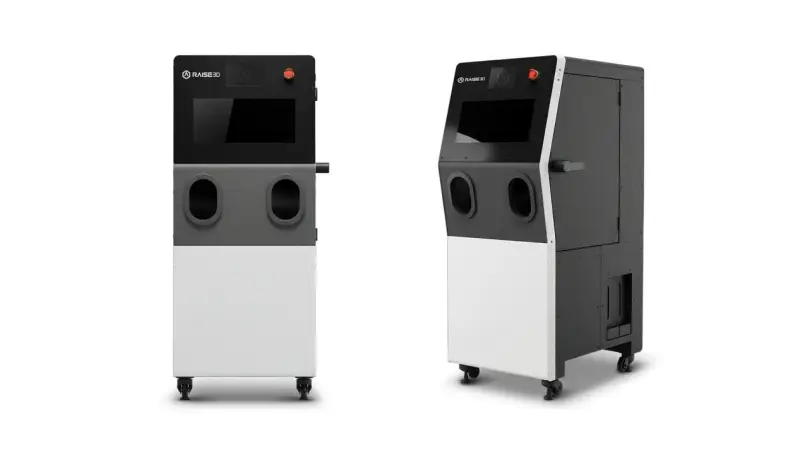
B520 brings repeatable blasting to batch work
The B520 is intended for the repetitive blasting stage after unpacking. In automatic mode, a removable basket holds suitable parts inside an enclosed chamber for a programmed cycle. Raise3D recommends a 10-litre load for the standard basket and 30 litres for the large basket. Those are basket load recommendations; the number of parts per cycle will vary with their size, shape, fragility and ability to move freely.
For similar parts recurring across orders, a programmed cycle gives operators a finishing process they can repeat. Different geometries may need different treatment: a tall cover, a delicate feature or a difficult-to-reach area may warrant individual attention. The B520 also supports manual blasting, and an optional polishing module adds another finishing route for applications that call for a different surface result. The suitable approach depends on the component and the required finish.
Raise3D Global CEO Edward Feng said the B520, together with the company’s expanding powder portfolio, is intended to cover materials, printing and post-processing as an integrated SLS workflow. He described the aim as improving production efficiency, maintaining consistent part quality and supporting scalable manufacturing across different applications. Those outcomes will depend in practice on material selection, build arrangement and how well each finishing step suits the parts being made.
Raise3D plans to show the RMS220 production system at Formnext from 17–20 November 2026 in Hall 12.1, Booth D21. The B520 will make its European debut there after being unveiled at RAPID + TCT in Boston in April. Raise3D schedules the sandblaster to begin shipping in December 2026. For RMS220 users, the immediate change is the free height increase; the broader production gain will depend on whether the expanded builds fit smoothly through cooling, powder recovery and finishing.


