Young Engineers Showcase Games, Web Apps and Robotics at Coolest Projects Spain
- Published
- Author
- Helen Gardner
- Reads
- 548
Twenty-nine creators presented projects in Gavà, including a 3D-printed Arduino arm, accessible games and an app for people with memory loss.
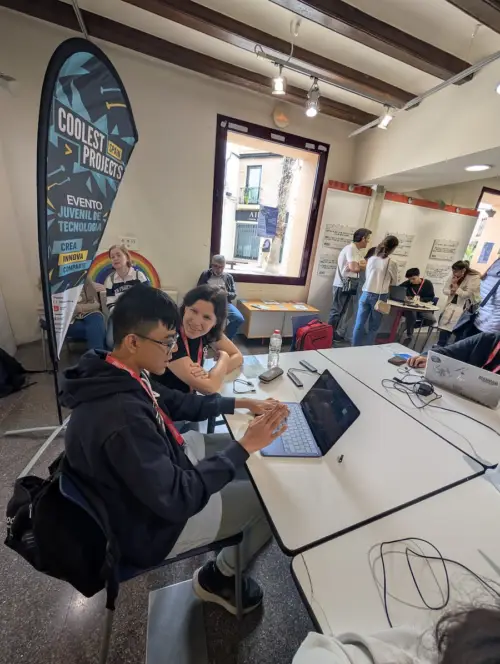
The practical range at Coolest Projects Spain was striking: 29 young creators brought games, web apps and hardware builds to Espai Jove La Casa Gran in Gavà on Saturday 24 October. Organised by DEQ4Future, the event showed how one project can combine several disciplines, from game logic and interface design to coding and physical fabrication.
Several entries started with familiar creative prompts: a horror game, a move between homes, a turtle separated from its family. Others put programming to work on accessibility, environmental themes or a physical mechanism. Together, the projects offered a useful snapshot of what young makers can build with accessible software tools and the skills they develop at school, in camps and through independent practice.
Games built around a clear idea
Nohan: Lost Abyss
At 15, Nohan used Roblox to create Lost Abyss, drawing on his interest in horror games. He likes game development because it brings different kinds of work together: coding, design, imagination and database management. For him, the difficult step came before implementation: settling on the initial concept.
Isabel: A Box Full of Yesterday
Isabel’s first video game, made in Unity, turns the process of moving house into a story about memory. The player controls a character preparing to leave a home and has to pack one last box. Its objects represent moments from the character’s life, including a photograph with a best friend and a favourite game played with his father as a child.
“It’s like a history game, and you control a character who is going to move house, and you have to pack his last box of things. These things are objects that represent a memory from his life, for example, a photo with his best friend, or his favourite game that he played with his father when he was little.”
The 15-year-old spent a month making the game. She learned through an online summer camp, YouTube tutorials and ChatGPT. The small scope gives the project a personal focus: familiar keepsakes provide the structure for a playable narrative.
Iris and Abril: TugaRush
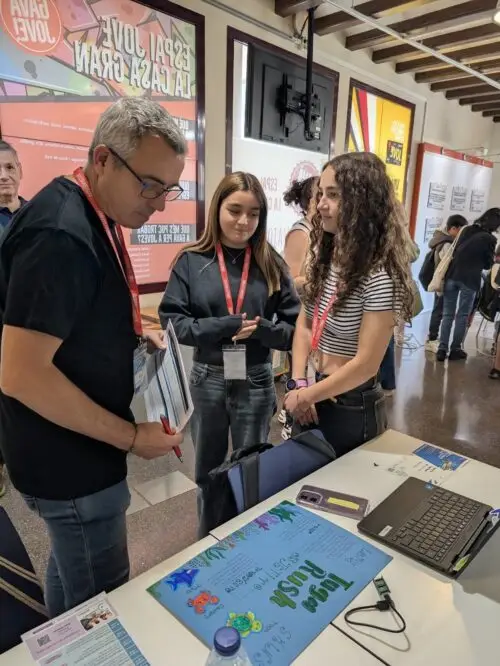
In TugaRush, built in Scratch, players guide Tuga, a turtle separated from her family by ocean currents. She has to avoid rubbish and pollution, including plastic bags and rusty objects, to reach them again. Each piece of rubbish that reaches the edge of the screen adds a point, while a separate counter records the player’s best score. Coins can be collected and spent in an in-game shop on character skins for Tuga the turtle, Cangri the crab and Tibul the shark.
“We wanted to create something accessible, perfect for when you’re tired and don’t want to think too hard, yet still engaging enough to keep you hooked.”
The design pairs a simple play pattern with a high-score system and optional character customisation. Iris and Abril, both 15, described accessibility and sustained engagement as goals for the game.
Arnau: Salvem el Planeta
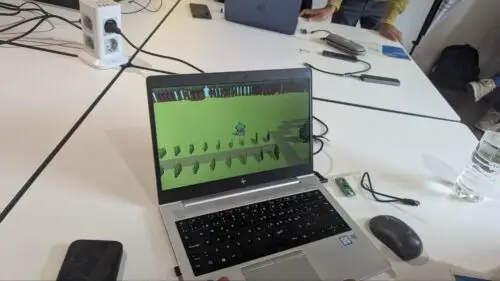
Arnau, 13, made Salvem el Planeta at school using RPG Paper Maker, completing it in around 10 hours. Players collect rubbish from a riverbank while learning about the Sustainable Development Goals. The game connects an in-game task with information about the goals it addresses and how collecting waste contributes to them.
Arnau described the project as a way to explain sustainability through action: “The project is based on the SDGs, which relate to sustainability and global issues, and involves going to the river to collect waste, such as plastics and other debris found along the riverbank. It also explains which SDGs are being addressed and how your actions help the world.”
From screens to hardware
Oriol: Robotic Arm
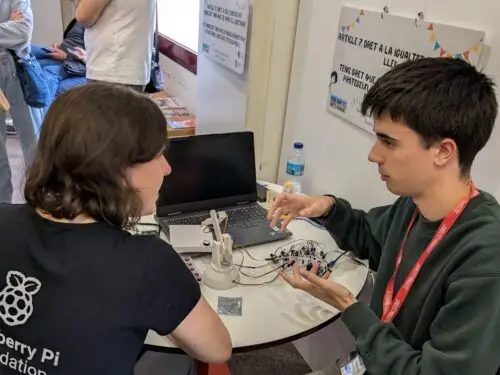
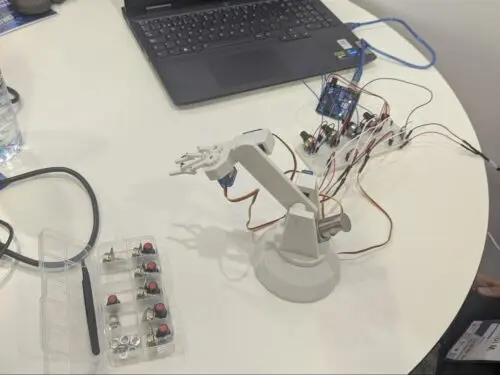
Oriol, 17, built an articulated robotic arm with 3D printing and Arduino for a high school science and technology project. He began work during the summer, motivated by the challenge of making something ambitious. Seven years of coding experience gave him a foundation for the project, which brought software and a fabricated mechanism into one build. The event description doesn’t specify the arm’s degrees of freedom, actuators or control method, so its standout detail is the combination of 3D-printed parts and Arduino in a student project.
Projects selected by the judges
The judges highlighted work across hardware, games and web development. Guillem and Eloi, from Igualada, made Signo, a Python video game controlled through sign-language gestures. Players use recognised gestures to attack a monster, linking gesture input with game interaction.
Nil, from Girona, was selected for Animal Defense, a strategy game in which players deploy animals to capture an opponent’s base. From Gavà, Alejandro presented Memvia, an app designed to help people with memory loss in daily life. It connects users with family, routines and memories through an interface described as clear and accessible.
The projects show different ways to make software respond to a user’s needs: gesture recognition changes how a player gives commands, while Memvia centres the interface on everyday connections. The hardware entry takes a different route, turning code and printed components into a movable arm.
Taking part
Coolest Projects Spain brought these projects together as a place for young creators to share work and see what others are building. Details about future events and the global online showcase are available at coolestprojects.org. The next cycle’s entries are set to open in January 2027. More event highlights are available from DEQ4Future.