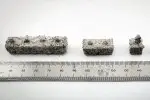
3D Printed PLA Microplastics Reduced Fertility in a Worm Study
- Published
- Author
- Paloma Duran
- Reads
- 768
A St. Mary’s University study found reproductive effects in worms exposed to particles made from printed PLA, while leaving key questions about dose and chemistry open.

Waste from 3D printing can have biological effects even when the filament is marketed as plant-based and biodegradable. In a study published in the November 2026 issue of Pollutants, researchers at St. Mary’s University exposed the nematode Caenorhabditis elegans to particles generated from a 3D printed polylactic acid (PLA) object. The worms produced fewer offspring and showed changes in reproductive tissue. Their lifespan did not change.

The result puts a useful limit on what labels such as “bio-based” can tell users about material breakdown. It doesn’t establish that PLA itself caused the effects, or predict what happens in people. Instead, it points to a gap in how 3D printing waste is studied: the particles made from real printed material may carry a mix of polymer and other chemicals that lab tests need to distinguish.
Reproductive effects, without a lifespan change
The paper, titled “3D Printing-Derived Polylactic Acid Microplastic Material Induces Germline Apoptosis and Impairs Reproduction in Caenorhabditis elegans,” reports reduced reproduction and altered gonad structure. The team also observed apoptosis, or cell death, in the germline—the cells that develop into eggs and sperm. No effect on lifespan was detected under the study conditions.
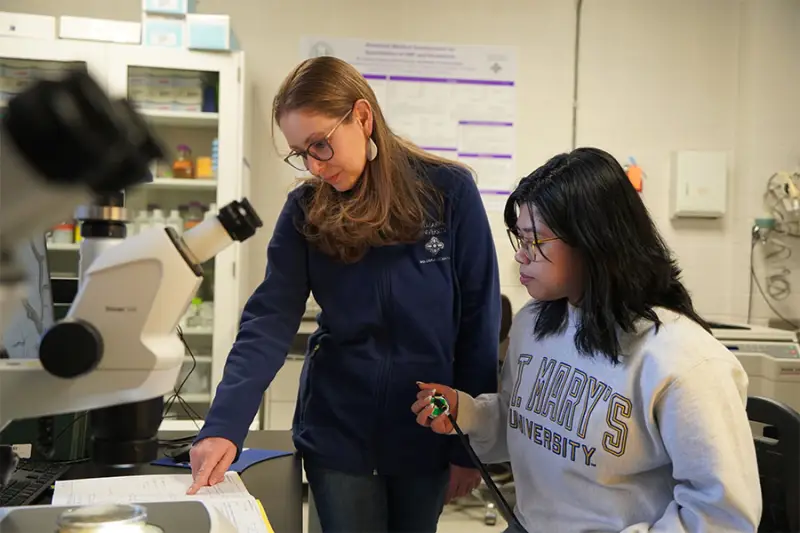
Jennifer Harr, Ph.D., Associate Professor of Biological Sciences and Director of the Forensic Science Program at St. Mary’s, led the research. The team used C. elegans, a model organism used in studies of development, health and disease. The worm shares genetic similarities with humans, but findings in this model do not by themselves establish effects in people. Microplastics have been reported in human blood and tissue, making questions about exposure relevant while leaving the health implications uncertain.
Harr said the findings challenge the assumption that plant-derived plastics are inherently safe once they fragment. As 3D printing and bioplastics see wider use, she argued, researchers need to examine the biological effects of the waste those materials produce.
What the experiment can and can’t establish
The study tested one concentration: 1 µg/L. That single dose cannot show how effects change as exposure rises or falls. The researchers measured the material by mass added to the exposure, not by counting particles. They also sonicated the suspension before use, so the stated mass concentration should not be mistaken for a measured particle concentration.
Chemical composition is another uncertainty. Analysis found PLA alongside more than 50 other components, including 14 chemicals the team could not identify. The study did not test leachates—the chemicals released from the material—separately. As a result, the observed effects can’t be assigned specifically to the PLA polymer, particle properties or accompanying additives. The authors’ term “PLA-MP material” reflects that uncertainty.
It’s also unclear how the worms encountered the particles. Adult C. elegans can swallow particles up to about 5 µm, but fewer than 3% of the particles were in that size range. Feeding interference or contact through the body surface could therefore have contributed to the effects. One measurement of mitotic nuclei also depended on the unit of analysis: larger nuclei were statistically significant when assessed per nucleus, but not when averaged per worm.
Next steps: separate particles from chemistry
The researchers’ planned follow-up work starts with characterizing the chemicals in the material. Testing leachates separately could help distinguish effects from released additives from those associated with the particles themselves. The team also aims to assess whether different chemical classes act alone or together.
More realistic aging conditions could help show how printed waste changes outdoors. The authors identify ultraviolet exposure and chemical processes as additions to consider, alongside mechanical wear. Testing multiple concentrations would also allow the team to build a dose–response curve, which the single-concentration experiment could not provide.
A poorly characterized waste stream
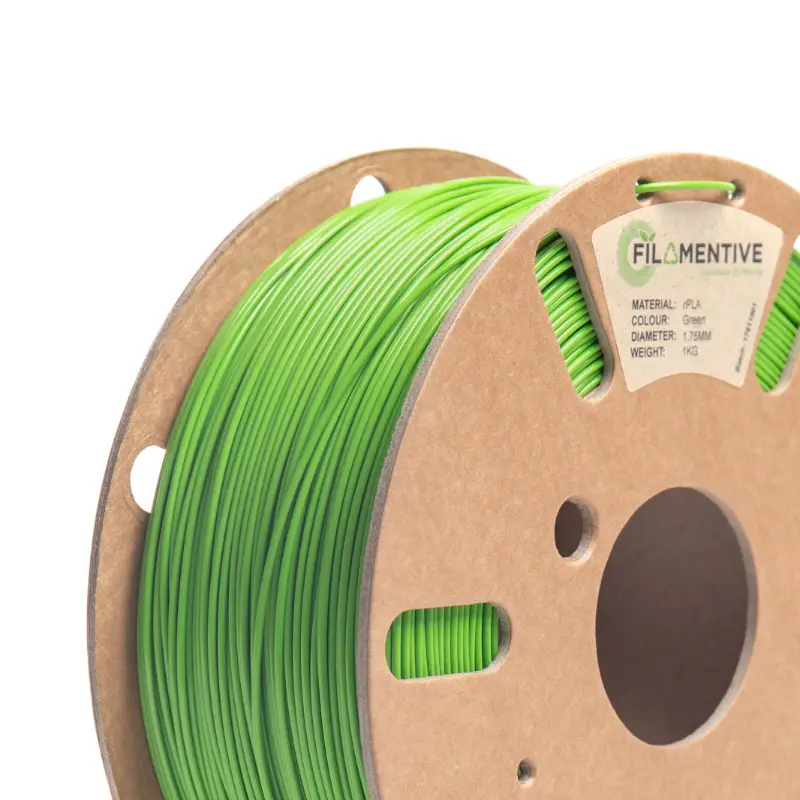
PLA is among the most widely used 3D printing filaments, yet the waste from printing remains less studied than emissions from operating printers. One study cited by the authors found that 34% of 3D printing material becomes waste. A UK filament maker, Filamentive, has separately claimed that 33% of printed parts become waste, amounting to 400,000 kg of plastic produced annually in the UK.
Some collection efforts turn failed prints into reusable sheets, including a program at CU Boulder. Those efforts address material that gets collected; they don’t characterize fragments that escape collection or what those fragments contain. The study’s focus on particles generated from a printed object also differs from research that uses pristine particles prepared in a lab. Real waste can produce irregular fragments, and decentralized printing makes that waste difficult to track.
Earlier health research on 3D printing concentrated on airborne emissions. The Chemical Insights Research Institute, part of UL Research Institutes, conducted more than 500 exposure studies over five years and linked emissions from material extrusion to respiratory and cardiovascular effects; its work found ABS more toxic than PLA. Another study reported that fumes from both filaments could contribute to airway cell injury and inflammation. The PLA waste study addresses a different exposure route: material after printing and disposal.
The work builds on a four-year, $669,951 research grant awarded to Harr in 2024, with support from the National Institute of General Medical Sciences under awards R16GM150406 and S10GM158739. The group has also studied microplastics carrying environmental chemicals. A December 2025 paper in Microplastics examined di-butyl phthalate, a compound used as a plasticizer and solvent in adhesives, paints and cosmetics; there, microplastics acted as carriers. The newer experiment instead examined material generated from a 3D printed filament.
Recent graduate Chiara Maldonado was first author on both studies. Harr described the project as interdisciplinary, involving undergraduates from biological sciences, forensic science-biology, chemistry, and environmental sciences and sustainability. The next useful evidence will come from separating the particles’ physical effects from their chemical contents, then testing how those effects change with concentration and environmental aging.